Sunday, January 13, 2008

Lorne "Gump" Worsley - 1963-69


Although Worsley played 21 years in the NHL, his career didn't really begin until he was 24 years old.

Prior to his 1952-53 rookie season with the New York Rangers, he played in five different leagues, winning honors and trophies at virtually every stop along the way. He was named the top rookie and best goalie in the USHL with the St. Paul Saints in 1950-51, was named the league's MVP in the Western League during his year with the Vancouver Canucks in 1953-54 and was placed on All-Star teams just about everywhere he went.

Worsley won the Calder Trophy his first year in the NHL despite a record of 13-29-8, testament to his tremendous play on an otherwise weak team. Next season, oddlu enough, the Rangers sent him to the minors in Vancouver, the only time a Calder winner never played a single NHL game the year after being so honoured. The following year he made the Broadway Blueshirts again, and stayed in the pro crease for the next decade.


The Rangers made the playoffs only four of the next ten seasons, and although Worsley was spectacular as the last line of defense, the team wasn't very good. In 1963, during the general managers meetings on June 4, 1963 in Montreal, Worsley was traded from New York to the Montreal Canadiens in a package for Dave Balon, Leon Rochefort and Len Ronson. New York received Jacques Plante, Don Marshall and Phil Goyette.


The additional pressure of playing in Montreal, and the expectation of winning, seemed to have nothing but a positive impact on Worsley's game. In his first season, however, he injured his knee and played most of the year in the minors with the Quebec Aces to get in shape. He started the next season with the Aces but was called up to the Forum in midseason. Worsley played heroically the rest of the way in leading the Habs to the 1965 Stanley Cup. He would never play in the minors again.


In his seven seasons with Montreal, he was on four Cup winning teams, but his career with the Canadiens ended on November 28, 1969, in Chicago, when his fear of flying got the better of him during an NHL schedule that demanded almost constant air travel. The Gumper suddenly retired.

Later in that same season, Worsley was convinced by Minnesota general manager Wren Blair to return to the expansion North Stars for the last few games of the season. Minnesota didn't have too many plane trips in its schedule, and Blair was also willing to pay Gump an additional $500 for a win, $250 for a tie and $100 for a shutout, over and above his salary.

Worsley, with a promise to play mostly home games, accepted and spent four more years in the NHL. He didn't retire until he was 44 years old, and it was only in the final six games of that final 1973-74 season that he wore a mask.

Gump: One On One


"I was born May 14, 1929", begins the story of 'Gump' as told by Lorne John Worsley. "My parents were living in a three bedroom flat on Congregation Street in Point St. Charles, which is a suburb of Montreal. It was the Depression, so there wasn't a lot of money floating around."
Worsley was a small boy, but enjoyed playing hockey in his neighbourhood.

"I played for a guy named Phil Walton. He owned a grocery store in our neighbourhood. I was playing forward but was getting knocked around a lot because I was so small. Walton said, 'You intend to play hockey for a living?' I said, 'I hope so,' so he said, 'You better get in the net.' That's why I ended up in the goal."


Although growing up in Montreal, Worsley didn't cheer for the locals.

"I hated the Canadiens," admits Worsley. "My favourite player was Dave Kerr with the Rangers." Davey Kerr started his netminding career in 1930-31 with the Montreal Maroons, the favoured team of Gump's father. Kerr later spent seven years with the New York Rangers, won the Vezina and was named to the NHL's First All-Star Team in 1940.

Lorne Worsley picked up an unusual nickname as a boy.

"I was about nine or ten years old. A fella I hung around with in Montreal named George Ferguson started calling me 'Gump.' I had hair that stuck up like Andy Gump, the comic strip character. The nickname came because of that." But the childhood tag remained for the rest of his life. "It's my own fault because when I went to play junior, you had to fill out a form and they asked for nickname and I put 'Gump' down and it stuck."

Although still smaller than most of his peers, Gump discovered he was better than most of the competition.

"I was about seventeen when I realized that I could make hockey my career. I tried out for the Verdun Cyclones in 1946." Worsley made the team and played for the Quebec junior team two years; from 1946 to 1948. "Verdun was a Rangers-sponsored team so I automatically belonged to the New York Rangers. There was no draft back then."


"I went to three training camps with the Rangers before I went to New York to stay," explains Gump. "The Rangers assigned me to the (New York) Rovers of the old Eastern Hockey League."
After turning pro in 1949-50, Worsley spent three years bouncing back and forth between leagues.

Finally, in 1952-53, Gump Worsley looked like he was ready for the National Hockey League.
"Charlie Rayner helped me out a lot at training camp that year." But Gump was sent to the Saskatoon Quakers of the Western Hockey League at the start of the season. "Rayner got hurt during the exhibition schedule. I was playing in Saskatoon at the time that I got called up. So I started off in Detroit. That was a great place to start. It was the season opener and we lost." The New York Times sports page read 'Worsley Stars in 5-3 Loss.'

"Charlie Rayner was a big help in my rookie season," states Gump. "I guess he knew he'd be retiring at the end of the season. He really taught me a lot." The team was an interesting mix of veterans likes Don Raleigh, Leo Reise and Rayner as well as prospects like Harry Howell, Andy Bathgate and Worsley. Yet, the team finished a distant sixth and ended the season in the cellar.
"I was surprised when I won the Calder Trophy because we only won 17 games that year. We finished in last place. Winning the Rookie of the Year was a big thrill of course."

After a solid rookie season in goal, Worsley was shocked to discover he was to spend the 1953-54 season with the Vancouver Canucks of the Western Hockey League.


When I reported to camp in 1953-54, I figured I was the Rangers' goaltender. But they had purchased Johnny Bower from Cleveland during the summer. I asked for a $500 raise and I got sent to Vancouver. It had to be about the money." The Rangers finished a respectable fifth, but still missed the playoffs.

"I was back with the Rangers for the start of the 1954-55 season," smiles Gump. This time, Bower went to Vancouver and Worsley was the Rangers netminder. But the sad-sack Rangers missed the playoffs yet again.

Phil Watson was named coach of the Rangers at the start of the1955-56 season - much to the eventual dismay of Worsley.

"Phil Watson was a jerk. If we won the game, it was because of him. If we lost, it was us." But the Rangers finished third; just two points out of second place. The team was in the playoffs for the first time in six seasons. "I was one of his whipping boys," admits Gump. "He'd say, 'You can't play goal with a beer belly. 'I'd say, 'I don't drink beer. I'm strictly a rye man."

The Rangers went to the playoffs in three consecutive seasons under Watson's tyrannical rule, but never finished higher than 1957-58's second place slot. Then, during the summer of 1963, Gump Worsley, Dave Balon, Leon Rochefort and Len Ronson were sent to the Montreal Canadiens in exchange for Jacques Plante, Phil Goyette and Donny Marshall.


"I was with Muzz Patrick (general manager of the New York Rangers) the night before I got traded. I asked him, 'Am I being traded?' He said, 'No, you'll be a Ranger for the rest of your career.' So I came home and one of my buddies called me and said, 'You've been traded to Montreal.' I said, 'Oh yeah, sure. Tell me another one.' He said, 'Turn on the radio.'

"So I was sitting in my backyard and I turned on the radio and sure enough, I'd been traded."
The blockbuster deal was consummated June 4, 1963. "That was tough," nods the Gumper. "To come and play at home was tough."

Worsley is still mildly bitter at the New York Rangers organization. "To this day, I've never been told by the Rangers that they traded me. Frank Selke (the Canadiens' general manager) called me and told me they had traded for me. That's the only official word I got."

The move back to Montreal was a new lease on life for the netminder, but injuries got in the way of his best laid plans. Gump was sent to he American Hockey League's Quebec Aces to recuperate and didn't return to the parent club until late in 1964-65. That season, he shared netminding duties with Charlie Hodge, and the two backstopped the Montreal Canadiens to a second place finish, followed by the Stanley Cup.

"We beat Chicago 4-0 in the final game. We were winning 3-0 at the end of the first period. It was a long game, I can tell you that!" For Gump, after twelve NHL seasons, he was finally able to taste championship champagne.

"That first one is a special one, I'll tell you! Nothing matched that thrill. My hometown Beloeil had a parade for me that summer."


The next season, with Worsley shouldering most of the netminding duties, the Canadiens finished the regular season in first place. Gump played 51 games to Hodge's 26, and the two combined to win the Vezina Trophy for the lowest team goals-against average.

"That was another first for me and a real thrill. Charlie Hodge and I got along well together," Gump states about his goaltending partner and roommate.

It was a superb season, and Gump acknowledges, "Things were going so well that it was great to go to the rink everyday." That spring, Worsley and his Montreal teammates earned a second straight Stanley Cup championship. Against Detroit in the final, Game 6 went into overtime.

"In the third minute of overtime, Dave Balon had the puck behind the net, shot it out and hit Henri Richard and the puck went in behind (Roger) Crozier," recalls Worsley.

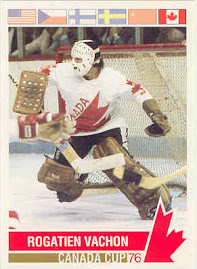
The NHL doubled in size to twelve teams in 1967-68. Charlie Hodge was lost to the Oakland Seals in the expansion draft, but nonetheless, Worsley and new partner Rogie Vachon guided the Montreal Canadiens to the Stanley Cup that spring. Then, a lot changed in Montreal the next season.

"We changed coaches from Toe Blake to Claude Ruel. We didn't see eye to eye. The fans were getting on my nerves. And we were travelling a lot." That proved to be Gump's undoing. "The Forum was being renovated and we played the first eight games of the season on the road. I hated flying."

Gump was off on a medical leave from late November until just past New Year's, then split the remainder of the schedule with Vachon. Then, Worsley broke a finger during the playoffs. Nevertheless, Montreal captured its fourth Stanley Cup championship in five years.


In 1969-70, Gump Worsley had clearly had enough of hockey and retired - at least, for the first time.

"I was at home. I had quit the Canadiens. Wren Blair (of the Minnesota North Stars) called me at home. I told him, 'You can't talk to me,' and he said, 'I got permission from Sammy Pollock to talk to you.' I said, 'Okay, what do you want?' He said, 'I want you to come play with Minnesota.'
I said, 'You're crazy! I'm forty years old.' He said, 'I know how old you are."

Worsley joined the North Stars, sharing goaltending duties with Cesare Maniago. The young team also boasted former Canadiens' Clause Larose and Danny Grant as well as fledgling stars Bill Goldsworthy and J.P. Parise. The next season, they added Worsley's friends Ted Harris and Bobby Rousseau.

"They were good years. That was a good time to play, I'll tell you. We had a pretty good team, you know." Gump enjoyed four full seasons in Minnesota.

"That was a good place to live. I was too old to start over again and buy a new house at forty. I'd been in my house for eighteen years. Now, I've been in the same house fifty-three years. I live about twenty miles outside Montreal in Beloeuil."

It was 1973-74 and Gump Worsley started the season still playing without a mask.

"I never really did wear a mask. The last six games I wore one. I was retiring and Wren Blair told me, 'You better put on the mask and save your eyes.' It was awful warm. And you still ducked."

By then, only Andy Brown of the Pittsburgh Penguins was still playing bare-faced. "The main occupational hazard is trying to stay alive while facing up to forty or fifty shots a game, and some of those shots fly 115 miles an hour. The toughest shot I ever faced was from Bobby Hull. In 1965, I got hit by a shot from Hull. It hit me on the right cheek. I was lucky; the flat side of the puck hit me, not the edge."

While discussing Hull as the finest shooter he ever faced, Gump names other outstanding players he competed against.

"Bobby Orr was the best defenseman I ever saw. Doug Harvey, too. Glenn Hall and Johnny Bower were the best goalies I ever played against. "

After the 1973-74 season, at the age of forty-five and having played twenty-one NHL campaigns, Gump Worsley announced his retirement.

"The final goal against me was by Dave Schultz of the Flyers. I remember the first one too - Ted Lindsay," Worsley laughs. "I was going to retire in 1970-71 and Blair said, 'Play one more year and I'll pay you one year to play and four years to scout.' That's how I got into scouting. I scouted ten years. I discovered Bobby Smith."

It is a much different game today than it was during the years Worsley played; a fact Gump readily admits. "When I broke in, there were only six goaltenders in the National Hockey League." Worsley stops and collects his thoughts. "We were the best in the world."

Friday, January 11, 2008

Canadiens Kids About To Hit Their Stride


Just beyond the halfway point in the season, fans can begin to sort out the pretenders from the contenders in the NHL, and see which teams are for real in the hunt for playoff spots and the Stanley Cup pursuit.

It is the time of the season where teams that have their acts together begin to solidify their standing among the league's better teams. Usually this means that teams on winning streaks are heading down the right road, whereas teams still in search of themselves aren't likely to solve their issues in time to resurrect dimming hopes.

Unless we are speaking of the well oiled machine known as the Detroit Red Wings, it could be stated that pretty much every team still has kinks to iron out and facets of their games to work on. Even the sometimes seemingly indestructable Ottawa Senators have their concerns.

In all this, our Montreal Canadiens have had their rough patches for sure, but appear to be headed in the right direction at the right time.

While it is sometimes difficult to assess the Habs in this era of what TSN's Bob McKenzie aptly terms "manufactured parity", one must remember that it should be against the remainder of the league that the Canadiens should be more logically compared with, rather than measured against it's own imposing historical stature.

I state this primarily because it is the main dilema I constantly face in determining how the team is shaping up.

I have learned that measuring the Habs against themselves is pretty much a losing proposition. I mean, how can the team at present possibly compete in the game of comparisons against the likes of any of it's former editions beyond the exception of the 1986 or 1993 Cup winning teams.
Fans my age, 45, or older, are both blessed and cursed by vivid recollections of teams so soundly build they had nary a flaw. Fans in their 30's or younger know the history and may be impatient to understand what it all feels like to experience their team putting it all together and going over the top.

What it adds up to, is that the perceptions of how the team is faring is divided and yanked by those two polar connundrums. There likely will never be a unified consensus until there is a parade.

Taking all that into consideration, perhaps you would agree that for now, it is best to look at how the Canadien fare in regards to the league they are in and playing against at present.


As it stands, the Canadiens are looking good, having lost just once in regulation in their last 10 games - 4-1 on December 23 in Dallas. They have gained points via wins and overtime losses in 9 of those 10 games, accumulating 15 of 20 possible points. This latest streak comes on the heels of their roughest patch wherin the answers to their woes looked to be beyond comprehensible solutions. Since then, the team has regrouped, lines and roles have been shuffled, and a winning formula has emerged.

There are many points to suggest that the Canadiens are presently hitting their stride and beginning to carve out an identity. While there remains great work to accomplish, it can be said that this team, one of the younger clubs in the NHL, is on the brink of better days.

It's biggest concern at present is the necessity of converting a strong road game into home ice success. Coach Guy Carbonneau put it best when saying that the reverse is much worse, and that a team that wins on the road merely needs to apply a similar focus at home. Teams that lose on the road simply are not blessed with the same elements and are missing much more than simple focus.

The plusses have begun to outnumber to worries of late, and the Habs have seemed to put certain flaws behind them. As they headed out on the road for a six game stretch over the holidays, it was established that the team needed points through this most crucial time of year. When they returned home confident from having bagged 8 points of the available 12, it placed a proper perspective on what the players felt they could be capable of. Back at home for a few games, the Canadiens have pointed in all contests since.

Through that time, the team has blossomed offensively, perhaps to their own surprise, and now find themselves the third highest scoring team in the league.

And you betcha, I'm shaking my head at that notion as well!

It's no mean feat for this young crew, and inside it all, the most important thing might be to keep the players feet on the ground.

Stop and think about it for a second - one of the youngest squads in the league is now one of it's highest scoring!

There is no better fact that can stand as a more solid testimony to what this team could build into than this. When it simultaneously becomes one of it's tighter teams defensively, it will finally aspire legitimately to the Stanley Cup.


A past grumble is that the Canadiens were suspect in 5 on 5 play and that winning was mainly achieved via their killer powerplay. Of late they seem to have rectified this by lining up three lines capable of putting the puck in the net. In doing so, they have also witnessed the emergence of what looks to be a proper number one line - Kovalev, Plekanec, and Kostitsyn - who have been on a better than a point per game tear for almost 20 games now. It's not a moment too late.

The fact that the Habs have become sounder at even strength points to a collective conscience brought on by experience and aquired and carried out responsibilities. It should soon translate into a better penalty kill as well. For all the team's visible improvements, the kill is one facet of their game that has taken backsteps. What is assuring to some extent, is that the team has the elements and the coaching staff to correct this as it matures.

Having a spread out attack with a projected 6 or 7 possible 20 goal scorers is a great asset. Many opponants aren't geared with the depth to shut down so many threats. Not having a 50 goal man in the lineup might concern some fans who feel we need an identified gamebreaker to go all the way, but the reality is quite contrary, as many teams have hoisted that mug we're after without one. Any team worth it's salt can shut down that identified sniper come playoff time. It's a whole other deal to snuff out three lines that could beat you on any given night.
Even more invigourating is the thought of how much better this team will become. Most of it's building blocks are hitting their strides individually as well. While the young are flourishing, the team elders are bringing consistency and leadership to the fore.

I can't write another sentence without pausing to mention that Alex Kovalev is a big reason for much of the good going on. His resurgence mirrors the team's collective blooming. It has been as exhilerating to watch him this season as it was painful to witness him grind himself into the ice last year in search of a decent shift. Kudos to Kovy for showing what he is made of.

From the net out, the Habs are being built to last.

It starts with the recently Hamilton stinted Carey Price, who has shown enough in his first 20 NHL to explain what all the fuss has been about. While he has faltered some of late requiring some fine tuning, he has been treated as an investment of the highest worth. No need to worry in his case.

Ahead of Price remains Cristobal Huet, who continues to maintain both a low GAA and high save percentage. He deserved another all star game nod for sure. The emergence of Price and all the future goalie talk with it have masked the fact that Huet remains the goalie of the here and now and imminent future.

The Canadiens defense will improve with confidence and time. Built upon rocks such as Markov, Hamrlik, and Komisarek, the remaining pieces are a collection of interchangable variables that don't have the same longevity written all over them. Markov and Komisarek are coming into their own before our eyes, with Markov about to trek off to an All Star appearence where he has been voted onto the starting lineup. Want a defenseman that leads the league in hits and shots blocked? We got him in Komisarek. Both players, doubt it not, can get even better. Hamrlik has been exactly the type of added experience and veteran poise the team needed to add to settle other elements down.

Filling out the backline corps are a defense by committee group that can suit various needs and comply with particular opponants. Mark Streit is the most interesting of the lot, as he is as adept at forward and the powerplay point as well. Not a mean competitor, Streit's value is that of an experienced pinch hitter or a chess piece that can quickly be shifted around no matter what is asked of him. Ryan O'Byrne has only been up for a short time, but the promise of his size, reach, and presence bode well for his future. He may never reach top four status, but what he can offer in the upside can be of great usefullness on a team still lacking in overall size. Josh Gorges is a player still in the works. He is having difficulty prospering as a player on the fringe, never quite knowing if his play is sturdy enough to keep him dressed. Once, and if, he overcomes this, we will have a much better clue as to what he can bring down the line. Francis Bouillon, always a fan favorite, remains a part that will, one day soon enough, be replaced. Playing big for a small but physical man has its undeniable limitations. His heart is always welcome, but he will never be more than what he is now. Patrice Brisebois brings experience, and that remains the best and most polite thing that can be said about him.

Up front is where the Habs make fans salivate most. With three lines of potential fire power, and youthful at that, this is where the team is growing fastest and best.

Tomas Plekanec has surprised and has become the team's number one center. He is 20 points ahead of his pace of last year, when he had a killer second half. He is on target for a 70 point plus season should his excellent play continue. Where it gets interesting with him, is that he brings a certain level of defensive awareness that can compensate for the adventuressness his wingers sometimes employ. His transition instincts are second to none on the team. He is only going to get better, and we are watching it happen right now.

Andrei Kostitsyn is in full bloom and has been a revelation. Sat out earlier in the season for concentration issues and indifferent play, he has since learned to use all of his vast toolbox of skill to the best of his ability. He can be the first forward on the puck pursuit and turn a play with a solid hit, he can pass with uncanny vision, and he can rifle the puck in and out of traffic with great proficiency. Each game, one gets the sense that we've only seen but glimpses of what will one day be quite an astounding talent.

The reborn Alex Kovalev is inspiring. In his early thirties, could it be that Kovalev has put all his focus and talent together at last? Watching him create on ice nightly, it gives the impression that his head is already in the playoffs. Having a player as explosive on the team, who can crank it up several notches in split seconds and make opponants shudder, is a weapon the Habs have long sought. Keeping him motivated is the key, and attaching the duty of big brother to the younger European players on the team should enable that for some time.


Captain Saku Koivu has slowed down some. After so many trials and tribulations, it is understandable to some extent. Still, on a given night, he can be inspiring, but it is the slight drop in his level of consistency that is cause for some concern. Nonetheless, he continues to lead the team in assists despite having had almost every winger on the team as a linemate at one time or another. The emergence of the Plekanec line as a bona fide top trio may actually help in getting more out of him in the long run. Considering that he is currently centering a pair of propering 20 year olds and still at his usual near point per game pace is reassuring. There can be justified doubt in whether it will he who first hoists that Cup we're after when the time comes, as he may be one element the team casts off in order to improve along that point. I'd rather it be done with him for sentimental reasons, but if the flipside is sacrificing him to achieve this, it then becomes the right thing to do despite what hearts suggest.

Remembering that Guillaume Latendresse got off to the most sluggish of starts this season, it is quite astonishing to see him as the fourth best goal scorer on the team at the midway point. Already only four goals off last year's totals, he has used his most obvious gifts to get there. Latendresse may always have issue with reading the neutral zone ebb and flow, but as long as his size is used in both ends and he knows the slot is his best friend, he will develop into a game breaker for the Habs. What is often underestimated in his evaluation is the committment he brings towards improving himself. Guillaume is more mature that his age suggests and rebounds well from off games. With the right center at the right time, I still see John Leclair with a hero's smile on his face in a big game.

Sergei Kostitsyn has been a pleasant addition to the lineup. Loaded with an abundance of talent, no one predicted he'd be in the picture so soon. While he will learn with his mistakes exposed, he is an experiment worth fast tracking. What has been most revealing in his case, is his willingness to dirty his face in elbows and high sticks in order to come up with the puck. Seeing a green horn go behind his own net to throw a hit has a certain effect in sending messages to his teammates. It will take him awhile to make pace adjustments as he is practically fresh out of junior, but inside a year he will be another addition to the list of 20 goal scorers on the team.


Chris Higgins is a dog, a determined and pursuant winner that rarely quits or gives an inch. With leadership written all over him, he has displayed the honesty needed when the team falters and a righting of perspective when it wins. He has cranked his intensity up a notch or two this season, working noticibly harder when his luck runs out around the net. Despite producing well enough to deserve top line status, it is a credit to his team goals and vision that he never winced when given new linemates. All Higgins did was to keep on giving his last drip of sweat. That's a trait of his we will be enjoying and admiring for years.

Michael Ryder has been snakebitten like no one Habs player since Sergei Zholtok turned a 26 goal season into a 1 goal in 32 game start in 2001. It is evident that Ryder has been more focused defensively than before, but he has been confounded to realize that it has come at the expense of his goal stats. He could rebound just as well as he could disappear. He would be advised to try to perfect some new tricks. The final stretch of the schedule will be telling in his case. The good news is he seems to have come around some of late, having possibly found a more comfortable niche with Higgins and Maxim Lapierre.

Maxim Lapierre likely didn't know what hit him when he was sent back to Hamilton to start the season. Having made the Canadiens last year and then heading back to the Bulldogs as a vital chink in their Calder Cup win, he was guilty of taking it easy and paid the price. Not that many people saw it this way at the time, but this is one good example of how Bob Gainey seeks to build character within a player who wears too much comfort too soon. It may be what is occuring at present with Price and Chipchura. Lapierre may have quietly spit fire, but he endeavoured to earn his way back at the first opportunity. When he returned to Montreal, his edge was welcomed back, and he has progressed with his icetime to give the Canadiens more speed and depth on the two bottom lines.

The Canadiens fourth line includes several shifting participants asked to fullfill particular roles from shut down specialists to sparkplugs when the team goes soft. The experienced Begin, Dandeneault, Smolinski and Tom Kostopoulos are interchangable parts that are able to make a difference in games. Their energy and leadership are valuable, but in the end it is not on their backs that the next championship will be built. Those tasks will fall to players such as Kyle Chipchura and others players that will push them out.

Over the last three or four seasons, the Canadiens have churned out talent quickly, adding small groups of rookies each year. The trend will maintain itself as the likes of D'Agnostini, Yemelin, Valentenko, Pacioretty, McDonagh, Fisher, Maxwell, White and other numerous prospects push up like daiseys to join the remnants of the curent lineup for years to come.

Before the season began, so called hockey experts called for the Canadiens to occupy the position presently held by the Maple Leafs. We laughed at the prediction, while maybe secretly worrying about regressing some before advancing. Initially, making the playoffs were the aim of the team, but with this lineup playing as it is now, I feel that anything less than a second round participation would be disappointing. I might even be tempted to state that this team is good enough to win two series, but time will tell.

The best part is watching this all evolve one game at a time when the fun is just beginning.

Thursday, January 10, 2008

Carey Takes His Lumps

Lots of ink is being spilled over the sending of Carey Price to Hamilton. It is in some ways surprising, and in others, somewhat expected. In light of recent performances in which the goalie, in my opinion, appeared rather lucid, this perceived setback might be just what the doctor ordered.

If your reaction to this news was the same as mine, your initial reflex was to question exactly what the heck was behind this unforeseen detour in the crowning of Price as goalie of the future.

I mean, three straight losses aren't Hell in a handbasket!

Admittedly, Price has been far from sharp of late, but this scenario was not in the cards. At least not yet.

This demotion, if one chooses to see it as such, could either be seen as a present lack of faith in Price, or simply as a careful handling of a precious jewel.

After first questioning the move as harsh, I considered the big picture.The Canadiens can ill afford to mess up on the best propect to come into the organization in eons. I'd rather they take cautious chances with him, over risky ones. The Habs organization surely knows Price better than anyone, and knows and understands what is needed by him in this trying time.

The reasons behind this unforeseen move may have to do with confidence, playing time, or in a worst case file, attitude tinkering and righting.

Evidently, the Canadiens organization saw Price slip some, and felt it neccessary to do something major about it. Since neither you or I know exactly what it was that brought this upon, I'll hedge my bets on thinking that those closer to the scene, know exactly what the situation required.

I'm not absolute in believing this comparison holds any water, but the demotion of Maxim Lapierre in October surely did not seem to zap the center of his spirit, intent and focus.What it rectified, we may not ever be priveledge to, but Max played one wicked game against the Hawks!

I questioned that decision at the time as well. I do not question it now.

May the same play out in Carey's case.

A Pair of Robert L notes: While researching some background into this story, I came upon Bertrand Raymond's column in Le Journal de Montreal. I have transcribed the piece here for those who wish to check it out.

On a personal note, this blog has, and may continue, to suffer from a slight bit of irregularity in coming days. With apologies to my regular readers, Eyes On The Prize postings may be slim for another stretch. I thank you in advance for your patience.

Two colliding reasons for the sparingly posted blogs here lately are the fact that I have updated to a newer comp - which is wicked lightning fast compared to my old dinosaur - and that my daughter's hockey schedule is into the thick of the season. Practices and games have been the order of the day on a daily basis.

Although I anticipated the crash of my old donkey in the quicksand computer - the timing sucked! Not only did three Habs stories die with the old machine, all my files were not initially transferable to the new system. Stories I have been engaged in are dead for now, until I can discover the intricacies of transfering hard drive files to this newer comp.

In all this morass, I have lost Wordpad files on the final entry in the Habs / Leafs players series, as well as an article for my local paper - on my daughter Pokecheck's unbelievable 8 goal game!

Yes, ouch! Such is life!

To make matters only more painful, Dave Stubbs of Habs Inside Out called upon me, needing some assistance with a posting while I was in this straightjacket mode, and I could not help him out. Onto the next Haley's Comet!

So, bare with me fellow readers, as GM's always say, it's a long season.

Price: Handle With Care


Robert L Note: These thoughts are transcribed from a Bertrand Raymond column in Le Journal De Montreal

I hope that the Canadiens know what's on the line when playing musical chairs with a gem the likes of Carey Price.

The 20 year old goalie isn't the first athlete his age to live through this experience. Many players have returned from the minors better prepared for the rigors of the NHL after suffering through a fate similar to what Price is about to experience.

Price is so important to the future of the organisation that they must take the time to fully explain what is behind the decision and why it is felt that it is best for him at this time. During his stint in Hamilton, he will need to be spoken to often, in order to check on his morale and his state of mind.

It will not be Bulldogs coach Don Lever's agenda to take care of Price. The goalie's ears will not be atuned to Lever, with whom he will never cross paths again once he is recalled to Montreal.

Roland Melanson will stay in contact with his student. Bob Gainey will occasionally call to get the news. Everyone one directly involved will be on top of things, reminding Price that he is still the spinal cord of the team's future hopes.

Over the next 15 years, the Canadiens will need Price much more than the goalie will need them. Athletes of his calibre will always find open arms when it comes to finding teams interesting in knowing whether he's curious about the grass being greener on the other side.

Why now?

All kinds of stories are circulating about Price, suggesting he was acting too self assured, was lacking concentration on his work ethic, seemed at times nonchalant, etc.

I have no idea whether these rumblings are true, and I have even less insight into whether they are behind his sojourn to Hamilton. Price is not the first player the Canadiens attempt to crack or correct in this manner.

If the decision is in fact a punitive one, he must accept it. If the reason behind it is merely to give him more playing time, then it is just as well. By contrast, if the move has been done in order to show faith towards Jaroslav Halak and incite him to have some patience in the teams plans for him, then it is neither logical nor well thought out.

Irregardless, Price has everything to gain by rolling up his sleeves and making the most of it, as it is unthinkable that in the event of an injury to Cristobal Huet, than the Habs choose to play out the stretch with anyone other than Price in goal.

Friday, January 04, 2008

Kovalev, A Leader And Big Brother


Robert L Note: This is transcribed from an excellent piece by Marc de Foy in today's Le Journal de Montreal.

Alex Kovalev is making up for the off year he had last season. For the second month running, Kovalev has taken the Molson Cup honours for Canadiens player of the month.

The line of himself, Tomas Plekanev and Andrei Kostitsyn has been on a tear, with no less than 41 points between the three of them in the teams last 14 games.

During that span, thetrio are the top three scorers on the Habs: Plekanec ( 5-9) and Kovalev ( 4-10 ) with 14 points each, followed by Kostitsyn ( 6-7 ).

Before last night's clash with the Lightning, Kovalev was but a dozen points off last season's total of 47. His 16 goals only 2 shy of last year's deceiving output of 18. Talk about your comeback seasons!

In explaining his renaissance, Kovalev simply stated that he " worked much harder during the summer."

"Over the course of a career, it's normal to have a bad year once. Nothing was working for me last season."


A Better Attitude

In addition to on ice problems, Kovalev was receiving too much ink for the wrong reasons. Off the ice, it was alluded that he'd become a distraction in the dressing room.

"I don't believe he was causing problems", said Guy Carbonneau, "But he's working hard this season. He has so much talent."

"Alex looked in the mirror this summer. He has stood out as one of our better players this season. He's changed his attitude. He's positive, he 's speaking out more."

One gets the impression that the talks he held with Bob Gainey after the season have had much to do with the changes.


The Kostitsyn's Guru

Kovalev has taken the brothers Kostitsyn under his wing. Just as Igor Larionov did with his Russian comrades during his time in Detroit, Kovalev acts as the two Belarussians' captain.

Two weeks ago in Atlanta, the brothers were performing their pre-game stretches while Kovalev stood before them comparing Ilya Kovalchuk and Alexander Ovechkin to Tiger Woods while giving an interview to a Montreal journalist.

The brothers never said a thing, but they were soaking up Kovalev's every thought, staring at him intently.

Times Change

Perhaps the only reproach one considers about the Kostitsyn's thus far has been their hesitance in being as cooperative with the media as Kovalev is. They cite their unfamiliarity with the language as their main concern, but everyone feels they understand it better and can speak it more than they let on.

One hopes that Kovalev will enlighten them in this regard as well.

"I was the youngest player on my team for four straight season", Kovalev states. "Back then, the average age on a team was about 30. Today, it's closer to 26. It's important that veterans show them how things are done, but leadership must come from all players. Even the younger players need to be leaders."

Chris Higgins and Mike Komisarek have stepped up. Plekanec is taking up more space as well. Kovalev's attitude and influence have made a difference.

"That's what is asked of veteran players", says Carbonneau. "The young players need guidance. It makes things easier for them."

Canadiens Ryde The Lightening


At times it wasn't pretty, but the Canadiens began getting it right in their first home test of 2008.

Through a second period spent spitting and sputtering, the boys in red put it together in the third period and squelched Tampa's comeback bid to earn what I believe will be a turning point win.

Why do I see it as such?

It has to do with character and confidence, and how the team refound the poise to shut down an opponant that had, at the 40 minute mark, turned the tables on them in a game that seemed to getting away from them.

After jumping out to what seemed a comfortable 3-1 lead, lapses and distractions got the better of the Canadiens, and they deserve full credit for grabbing the bulls by the horns in the third period.

Merit must go to coach Carbonneau for assessing exactly what the Lightening would do in the third period, and conveying it loud and clear to his players who executed the game plan.

In all honesty, the coach's job was made easy by the fact that Tampa are a one line team.

Knowing full well that meant seeing Vincent Lecavalier's line for much of the third, Carbonneau paired Komisarek with Hamrlik for containment purposes, and allowed Andrei Markov to play off against the other lines.

The end result was Lecavalier's line going minus three for the third period alone. That the Habs are a team three lines of scoring prowess deep, if and when given the room, and the Lightening are at best a one trick pony, the plan couldn't fail unless the same indisciplines of the second period were allowed to continue.

Where this win mattters in the Habs grand scheme of things, is how the team got seriously focused to railroad Tampa's surge by dividing its weaknesses and conquering. As soon as Andrei Kostitsyn notched the go ahead goal, the Lightening were playing into the Habs hands by overemploying and overextending the Lecavalier line's shifts.

As good as the best player in the NHL is, he cannot win games alone without support. Lecavalier and the Lightening will be deafeated by deeper teams on a consistant basis, and as long as opponants do not fall asleep by taking them lightly, they should reach easy victory.

What the Canadiens need to take as lessons from this game is that focus is not a variable. This one, should have been won 6-2 or 7-1. Break it down to experience for what is still a very young team.

All things considered, no one here, fans or players should be getting too high about this win. On home ice, the Lightening are a team the Habs should have trounced as they did. Despite notching 6 goals in the game, they slayed no beast.

Beat a tougher opponant, then pound your chest!

One player who call this game a benchmark will be the much maligned Michael Ryder, who in the space of a few games has been able to double his seasons goal production.

With his two goals, his first two on home ice, Ryder may have finally booted the monkey off his back - and that can only mean good things.

I'm thrilled for him, and I hope his confidence enjoys an injection of self esteem. Perhaps as a third line player, Ryder will have more success not facing the usual defenders who know what it takes to shut him down. Ryder has suffered this season, and maybe now his struggles can be given a leash.


This win, and the recent road swing success, should by now have established that the Canadiens number one line is in fact the trio of Plekanec - Kovalev - A. Kostitsyn.

While Kovalev has practically equalled last seasons goal output, it is his fusing with linemates that impresses me most. Kovalev no longer tries to do it all by himself, and his willingness to employ their talents, as well as his dedication to being sounder defensively, has enabled the entire line to prosper.

Plekanec is a better two way center than most give him credit for. Without Kovalev hogging the puck and taking risks like he did as habit last season, Plekanec has been able to position himseld better and transform plays from all areas of the ice. Last season his points were originated mainly within the opposition's blue line, but thanks to Kovalev's committment deep in his own end, plays originate deeper this season, and Plekanec has been enabled to use his talents in springing his wingers in full stride.

What has been most notable by this change in philosophy, is the importance the line has taken on in the Canadiens overall perspective.

As the line goes - so do the Habs. They are now the Canadiens number one line - without doubt.
Perhaps the biggest benficiary has been Andrei Kostitsyn, who has produced above a point per game ratio in his last eleven, while remaining a constant scoring threat.

I get the feeling we are watching a star player bloom here.

Andrei Kostitsyn reminds me a whole lot of Stephane Richer, who I've always described as a million dollar talent with a ten cent head. Kostitsyn has the same physique, shot, and speed, without Richer's issues. He makes subtle mistakes in each game, but the Canadiens have shown a willingness to let him play through them as he learns. We are seeing the dividends of that judgement as he blossoms.

What the team as a whole needs to focus on now, is that their next opponant is hardly the team they beat tonight. The Washington Capitals have just embarrassed the Conference leading Senators in home and away games.

Coach Carbonneau's prep speech should begin something like - "Remember those 2 points we missed the playoffs by last year - they are at stake tonight!"

Thursday, January 03, 2008

12 Canadiens Goalies In The System From 1960 To 1965

Habs goaltender Ernie Wakely


When one thinks of the Canadiens goaltenders of the 1960's, the names Plante, Worsley, Hodge, and Vachon immediately spring to mind. Little do Canadiens fans realize that the Canadiens goaltending prospect stable was never more full to overflowing than it was in the early 1960's.

The farm system begun by Frank Selke, and continued and grown by Sam Pollock, allowed the Habs to build up and turnover assets at an incredible rate. Pollock, with the NHL's competitive survival in mind, was one of the most persistant backers of a league expansion in which it would eventually double in size. Knowing full well this was about to happen, Pollock slyly stockpiled talent for future bartering when the needs would be called upon.

By the time the 6 new franchises arrived in 1967, Trader Sam had three hands full of cards to deal, and God knows what up his sleeve!

In the Canadiens affiliated farm teams of the era, there were no less than a dozen goaltending prospects of which to brag of from 1960 to 1965. Some would see action briefly with Montreal, others with the eventual expansion teams, and some would see their careers extinguish after brief flickers of success unsustainable.

Pollock made the best of most of their worth, packaging them for draft picks, futures, cash, and whatever it took to further the Canadiens goal of refurbishing and recycling talent annually.

Some of the names might sound familiar to older Habs fans. They were: George Holmes, Bob Champoux, Fern Rivard, Ernire Wakely, Jean Guy Morrisette, Andre Gagnon, Rocky Farr, Gil Banville, Ted Ouimet, Cliff Rose, Carl Wetzel, and Gerry Desjardins.

Here are their profiles.

Gerry Desjardins - In The System 1965-68


Goaltender Gerry Desjardins had a three year association with the Canadiens, playing for their Houston Apollos and Cleveland Barons farm teams. Desjardins went on to a successful seven-year NHL career, which most would agree could have been much longer had a serious eye injury not prematurely ended his career.

As a 20-year-old, Desjardins played major junior hockey with the Toronto Marlboros, playing in 53 games. He posted an impressive 32-4-7 record with a 3.81 goals against average.

Signed by Montreal the following year, Desjardins was tending goal for the Houston Apollos of the CPHL in 1965-66, playing in 19 games. He shared the netminding duties with veteran Marv Edwards and both were outstanding, but in a six team NHL, there were not many jobs for goaltenders. He played one more year in Houston, getting the start in 36 games.


For the 1967-68 season, Desjardins had hoped of landing an NHL job as the league immediately doubled in size to 12 teams with expansion. However, he was overlooked once again. So, Desjardins played with the Cleveland Barons of the AHL, and was clearly one of the major stars of the league. He played in 66 games, proving his workhorse abilities.

On June 11, 1968, the Canadiens traded the highly sought Desjardins to the Los Angeles Kings for first round draft choices in 1969 and 1972 that turned into Dick Redmond and Steve Shutt, respectively.

In 1968-69, Desjardins won the starting job with the Los Angeles Kings, one of the expansion teams from the previous year. He was thrown right into the fire, getting the start in 60 games.

On one of the worst NHL clubs that year, Desjardins again proved to be a bright spot, keeping the Kings competitive in many games and recording four shutouts.


Desjardins followed up his rookie season with a 43 game performance in 1969-70 and once again was the reason the Kings managed any semblance of respectability. At 26, just as things seemed to be moving along nicely in his career, the Kings obtained Rogatien Vachon in a trade with the Montreal Canadiens.

Vachon immediately took over the role as starting goalie, relegating Desjardins to backup. Late in the season the Kings traded Desjardins to the Chicago Blackhawks, but his playing time would not increase appreciably there either, with the presence of all star goalie Tony Esposito.

Nonetheless, Desjardins played in 22 games during the 1970-71 season, going 12-6-3 with a 2.41 goals against average.

In 1972-73, he was picked up by the expansion New York Islanders in the dispersal draft. That year he backstopped 44 games for Long Island, but as one would imagine with an expansion team, he lost more often than he won. The following year was also tough on the fledgling team, although their defensive game was aided tremendously with the drafting of a young defenseman named Denis Potvin. Desjardins started 36 games, going 9-17-6.


Although the club was making strides at improvement, it was difficult for a veteran netminder like Desjardins, so he opted to try his hand in the WHA, signing with the Michigan Stags for the 1974-75 season. But, the WHA turned out to be every bit as difficult as the NHL. In 41 WHA games, Desjardins was 9-28-1 with a 4.26 goals against average.

Late that same year, he returned to the NHL, joining the Buffalo Sabres. Sabres GM Punch Implach took advantage of a clause in Desjardins' contract with the Stags, which said he could leave the team if they moved - which they did - to Baltimore. In nine regular season games with Buffalo that season, Desjardins went 6-2-1, with a 2.78 goals against average before leading them all the way to the Stanley Cup finals, where they lost in six games to the Philadelphia Flyers.

Over the next two seasons, Desjardins was the number one backstop in Buffalo, playing in 55 and 49 games, respectively. Early in the 1976-77 season, Desjardins' hockey career came to an abrupt end, when a puck struck him the eye in a game against the Boston Bruins.

Carl Wetzel - In The System 1965-67


Wetzel's nomadic career began playing Junior hockey in Hamilton but he played a single game as a pro during his final season there. Over the next three years he played for five different clubs before putting his career on hold to fulfill his military obligations. Carl served in the United States Military during the 1962-63 season, and for most of the 1963-64 campaign.

Two years would pass before he returned to the ice, though he only played six games in his first year back. However, two of those contests were in the National Hockey League. Wetzel made two appearances in goal for the Detroit Red Wings but was victimized four times in just thirty-two minutes of play.


Wetzel was claimed by Montreal from Detroit in Reverse Draft, June 9, 1965 and sent to the Quebec Aces of the AHL. Wetzel joined the National team in 1966 and played in his first World Championships. Despite the fact that the U.S. squad finished fifth in the tournament, Wetzel was named to the tournament All-Star team. Later that season, he was sent to Minnesota by Montreal for cash on June 14, 1967.

Wetzel played five games for the North Stars and was able to register his only NHL win while also adding a tie to his career statistics. That season in the minors Wetzel backstopped the Rochester Americans to a Calder Cup championship. When he spent all of the 1968-69 campaign back in the minors, Wetzel returned to the National Team for the 1969-70 season.

After two years with the Nats and a second World Championship appearance he elected to continue his career in Europe. Wetzel signed on with Kitzbuhel of the Austrian League but after just one year there he was lured back by a contract offer from the upstart World Hockey Association.


Wetzel's final season as a pro was spent back in Minnesota, this time with their WHA franchise, the Fighting Saints. The Saints goaltending duties were split between Jack McCarten and Mike Curran with Wetzel playing just a single game. Though he was tagged with a loss in his final start, Wetzel played well giving up just three goals.

Cliff Rose - In The System 1965-67

Cliff Rose played for the Montreal Junior Canadiens in 1965-66 and 1966-67. He appeared in 23 games over two seasons in which his GAA was 3.69 and 3.77.

Ted Ouimet - In The System 1964-68


Goaltender Ted Ouimet played one game for the St. Louis Blues in 1968-69. He was a fine junior and minor pro player during a career that lasted over a decade.

Born in the Quebec mining town of Noranda, Ouimet played three years with the Montreal Junior Canadiens before joining the London Nationals in 1967-68. In June, 1968 he was traded to St. Louis Blues in a cash deal by the Montreal Canadiens, who had a surplus of talented netminders.

Ouimet played one game for the Blues during his rookie season in the pros but spent most of his time with Kansas City of the CHL. He continued to toil in the minors until 1975 and also played one game for the New England Whalers of the WHA. Before retiring after the 1974-75 season, Ouimet's best year was in 1973-74 when he recorded a 2.97 goals against average for the Syracuse Blazers and was names to the North American league first all-star team.

Gil Banville - In The System 1963-70


Goalie Gil Banville was a Canadiens farmhand who never rose beyond the minor leagues in a 9 year career.

Banville was born in Baie Comeau, Quebec on April 20, 1942, and was known mainly as a goaltender with the Quebec Aces from 1963 to 1970.

During his time in the AHL, Banville had four stays with Quebec, with trips to Jersey and New Haven of the EHL, Phoenix and Seattle of the WHL, and Houston of the CPHL.

Banville never had much opportunity to make it with the Canadiens. Playing ahead of him in Quebec and Houston were a cast future NHL veterans and AHL journeymen that included Charlie Hodge, Gump Worsley, Fern Rivard, Ernie Wakely, Rogatien Vachon, Carl Wetzel, Michel Beaulieu, Gerry Desjardins, Ron Gilbert, Jean - Guy Morrisette, Gary Bauman.

Rocky Farr - In The System 1963-70


Farr is the goaltender on the right.

Norman Richard "Rocky" Farr played 18 games in net for the Buffalo Sabres in the early 1970's. A fine amateur and minor pro goalie, he was unable to take hold of a permanent spot in the big leagues.

The Toronto native moved to Montreal as a teenager and played for the Notre Dame de Grace Monarchs and Montreal Junior Canadiens in 1963. In 1965-66 he returned to Ontario and spent two seasons with the OHA's London Nationals and Oshawa Generals. Farr bounced around the minors for three years before he was plucked off the Montreal Canadiens' surplus roster in the Expansion Draft by the Buffalo Sabres in 1970.


The young netminder split the 1970-71 season between the Springfield Kings of the AHL, the WHL's Salt Lake Golden Eagles and the Fort Worth Wings of the CHL. The next year he impressed at the Buffalo training camp and was slotted to play with their top farm team in the AHL, the Cincinnati Swords. Farr led all AHL goalkeepers with 52 appearances in 1971-72 and posted a solid 3.06 goals against average.

Farr played half a game for the Sabres in 1972-73 but otherwise excelled for the Swords and helped them win the Calder Cup. When veteran Roger Crozier was ailing in 1973-74, Farr was recalled to back up Dave Dryden. He posted a 2-4-1 record in 11 appearances but the Sabres were in disarray after a star forward Gilbert Perreault was lost with a broken leg. Farr played seven games for a much sronger Buffalo team in 1974-75 but his fate was sealed when Gerry Desjardins was acquired in the second half of the season. He played sparingly in the minors in 1975-76 before announcing his retirement.

Jean Guy Morrisette 1963-64


With a little more luck, the diminutive Jean Morissette might have tended goal for the Canadiens for a good part of the 1963-64 season. Morissette played in just one NHL game but it was a special memory for him, especially getting to play in net for the Montreal Canadiens.

The biggest game of Jean Guy Morrisette's hockey career took place on October 30, 1963 when he got the call to replace Gump Worsley, who was sidelined by an injury in the second period of a game against Toronto.

Morissette was Montreal's spare goaltender at the time, but had never been pressed into action until this day He was noticeably nervous in goal, accentuated by the fact he allowed four goals on 17 shots in what resulted in a 6-3 loss to the Leafs.

The lowest point in Morissette's career also came during the 1963-64 season.

In fact, it came but one day after his one and only game in the NHL. On October 31, 1963 he was hit in the face with a hard shot which broke his cheekbone. Morrisette would miss the remainder of the season.

The Canadiens loaned Morrisette to the New York Rangers for the balance of the season in 1964-65 as part of a Dick Duff - Bill Hickie trade, but unfortunately the goalie never saw game action.

Morissette continued to play goal for eight more years, the majority of which were spent in the AHL and WHL with various clubs. While still Canadiens property, Morrisette was claimed by Hershey of the AHL in a 1966 reverse draft.

His last two pro seasons were spent with the Grand Falls Cataracts of the Newfoundland Senior League. Both years Morrisette helped the team advanced to the Allan Cup championships.

Andre Gagnon - In The System 1963-65

Andre Gagnon played 47 games for the OHA Montreal Junior Canadiens in 1963-64, registering three shutouts and a GAA of 3:23. The following season he moved to the IHL, playing 37 games with the Muskegon Zephyrs, and finished out the 1964-65 season with the Cleveland Barons, appearing in 13 games. After a years absence from the games, Gagnon played for the Long Island Ducks and the Springfield Indians in 1966-67.

Ernie Wakely 1962-69


Goaltender Ernie Wakely owns one of the NHL's most dubious honours - and that's taking achievement to extremes.

Wakely's name is engraved on the Stanley Cup twice, with the 1965 and 1968 Montreal Canadiens.

Not too shabby for a goalie who's played all of two career games with the Habs. Even odder when one considers that those games were played in 1962 and 1969, respectively. It gets downright unreal at closer inspection. Wakely, a Canadiens farmhand goalie of seven years, had not even set foot in Montreal in the seasons for which he has been immortalized.

Such went Cup name engraving in the days before stringent rules were set about for such qualifications. Still, Wakely's erroneous honour fell through the cracks.

Truth be told, Wakely was a number, pure and simple, in a stacked Canadiens system in the 1960's. He played with the Montreal sponsored Houston Appolo's, sharing net duties with other Habs prospects such as Tony Esposito, Phil Myre, Gerry Desjardins, and Rogatien Vachon.


His tale is that of a journeyman goalie, awaiting opportunity, despite the effortless and dubious reaching of a pinnacle.

During Wakely's tenure in the Habs organization, he was given a round trip tour of the Canadiens sponsored teams of the 1960's.

Starting in 1961-62, Wakely saw action with the Hull Ottawa Canadiens, Kingston Frontenacs, and North Bay Trappers of the EPHL. He returned to Hull Ottawa for 41 games the following season but finished out in Spokane of the WHL, playing three games with the Comets. The high point of the season was a stopover with the NHL Canadiens, where he earned his first NHL victory, allowing 3 goals in the win.


In 1963-64, he split the season between the AHL Quebec Aces (8 games) and the CPHL Omaha Knights (59 games). He was stellar with the Knights, posting a 38-16-5 record, with a 2.93 GAA. Wakely began the next season in Omaha (11-3-1) before being promoted to the AHL, splitting duties with the Quebec Aces and Cleveland Barons.

Wakely made the same two cities his home in 1964-65, playing a game in each city in 1965-66, before finishing out with the WHL Seattle Totems.


With the NHL expansion on the horizon, Wakely was one of the more busier minor leaguers over the next three seasons. In successive years, he played in 70 games with the1966 Cleveland Barons of the AHL, 57 games with the Houston Apollos of the CPHL, and with the AHL Barons again for 65 games.


Along the road of 1968-69, he squeezed in a big time shot with the Habs, allowing 4 goals for his first NHL loss, only 7 seasons after his first NHL win.

Mercy finally arrived for Wakely on June 27, 1969, when the Canadiens dealt the 28 year old to the St. Louis Blues for Norm Beaudin and Bobby Schmautz.

The 1969-70 season provided the breakthrough Wakely needed. He appeared in 30 games for the Blues, registering a 2.11 GAA and four shutouts.


Wakely once stated that, "You can't judge a player until you've given him a chance to play in the big league."

It was also a pressure packed situation in St. Louis, having to take over from the legendary Glenn Hall. Wakely made the most of his opportunity, helping lead the Blues to the Stanley Cup finals, where they were defeated in four straight by Bobby Orr's Boston Bruins.

Building upon his first year success, Wakely backstopped the Blues to 20 victories the following season, starting 51 games in goal for St. Louis. By now, he had earned the reputation as being a solid NHL calibre goaltender, which was noticed not only by those in the NHL, but also scouts for the fledgling WHA.

The Winnipeg Jets, already in prized possession of the Golden Jet Bobby Hull, made an offer that Wakely could not refuse. It was also an opportunity to play professional hockey in his home province. For the next two years Wakely tended goal for the Jets before moving on to the San Diego Mariners six games into the 1974-75 WHA campaign.

After a brief 6 game stint with the Cincinnati Stingers in 1977-78, Wakely packed his bags for Houston where he finished out the season with the Aeros.

In 1978, Wakely went to the Birmingham Bulls in what would be his final professional season and also the swan song for the WHA. Just four teams would be absorbed into the NHL. Wakely realized that at the age of 39, the chances of his landing a job were slim at best, so he decided to call it a career.

Fern Rivard - In The System 1961-67


Fern Rivard was a career minor league goaltender until he was rescued by the 1967 expansion. He toiled in the Montreal Canadiens farm system with five different teams over 8 seasons before catching the break that would land him in the NHL.

Born January 1, 1946 in Grand'Mere, Quebec, Rivard moved steadily upwards in the Habs hierarchy, starting with the Quebec Citadelles (QJHL) in 1961. Two seasons later, still with the Citadelles, he was a first All Star team goalie, and repeated the feat the following year. At season's end in 1964, he made his professional debut with the AHL's Quebec Aces.


Rivard returned to the QJHL in 1964-65 for a fourth year, this time as a member of the Thetford Mines Eperviers. Even though he played in 19 games with Thetford Mines, Rivard did spend some time with the Montreal Jr. Canadiens of the OHA Junior "A" Hockey League.

Rivard spent the entire 1965-66 season with the OHA-Jr. Peterborough Petes. The 1966-67 season saw Rivard join the Muskegon Mohawks of the International Hockey League where he played in a career high 68 games, before having his NHL rights transferred to the Philadelphia Flyers after the NHL club purchased Quebec's AHL franchise.


Rivard returned to the Aces for the 1967-68 season and was claimed by the Minnesota North Stars at the end of the season in the Intra-League Draft. Although he spent the majority of the 1968-69 season with the Memphis South Stars of the Central Hockey League, Rivard made his NHL debut with Minnesota and played in 13 games that season.


When the 1969-70 season came around, Rivard played in 14 more games with the Stars, even though he spent the better part of his season with the CHL's Iowa Stars. Unable to warrant a call up to Minnesota in the next three years, Rivard became a member of the AHL's Cleveland Barons (1970-72) and Jacksonville Barons (1972-73) before getting his next NHL start during the 1973-74 season.

During the 1973-74 season, Rivard played in 13 games with Minnesota after being called up from the AHL's New Haven Nighthawks before making 1974-75 his last year of professional hockey.

Fern Rivard played in 55 career NHL games and finished with nine wins, 26 losses and eleven ties and a career 3.98 GAA.

Bob Champoux - In The System 1961-63


Goaltender Bob Champoux came up through the hockey ranks with relative obscurity, never really catching the eye of scouts, yet he managed to make it to the pinnacle of the hockey world, playing 17 games in the NHL.

Champoux played for the Palestre Nationale in Quebec in 1960-61, and in 39 games, picked up three shutouts and a 3.08 gaa.

In 1961-62, Champoux began a short affiliation with Montreal Canadiens sponsored junior clubs. He played in the only eight games of his major junior career, starting for the Montreal Junior Canadiens. In 1962-63, he returned to the MMJHL where he played with the St. Jerome Alouettes.

Thanks to a strong season with St. Jerome, Champoux earned himself a spot with the Cincinnati Wings of the CPHL the following year. He quickly established himself as the team's top goalie, and appeared in 60 games, sporting a rather lofty 5.60 GAA.

Champoux was called up by the Detroit Red Wings that year, but never actually dressed for game action, so although he was considered part of the team, he did not have any NHL games put to his credit.

In 1964-65, Champoux played four games with the Memphis Wings and one game with the Minneapolis Bruins of the CPHL before joining the Pittsburgh Hornets of the AHL for 13 games.

He remained in Pittsburgh for another year before being loaned to the WHL's San Diego Gulls by the Detroit Red Wings in September, 1966. As it turned out, the loan turned into a trade and Champoux remained in San Diego for more than three years before being temporarily loaned to the Kansas City Blues of the CHL for the loan of Gary Edwards.


Following a couple more years with San Diego, Champoux signed a free-agent contract with the NHL's California Golden Seals for the 1973-74 season. He played in 17 games that year, going 2-11-3 with a 5.07 GAA while playing for one of the worst teams in the league.

The balance of Champoux's season was spent in Salt Lake as a member of the Golden Eagles of the WHL, where he started 44 games and compiled a record of 23-16-3. In 1974-75, Champoux played for the Syracuse Blazers of the NAHL and the Winston-Salem Polar Bears, where he remained for another two years before retiring after the 1976-77 campaign.

George Holmes - In The System 1961-62


George Holmes was born in Niagara Falls where, with his father George Sr. coaching, he learned to play goal on the old Stamford Racetrack pond, and in the Hermes and Legion Hockey Leagues.

At age 14, he was given a chance to tend goal for the newly formed Jr. "8" Cataracts. Following a year of midget hockey, George was drafted by the Montreal Canadiens organization. He was assigned to the Peterborough Petes and two years later joined the Montreal Junior Canadiens.

In the 1961 -62 season, he won the Dave Pinkney Trophy awarded to the OHA goalie of the year. He completed his junior hockey with the Eastern Professional Hull Ottawa Canadians, and at the season's end joined the Niagara Falls Flyers as back-up goalie at the Memorial Cup finals in Edmonton.

With NHL expansion not yet reality, George chose not to pursue a professional career and returned to Niagara Falls where he has enjoyed many years coaching both Jr. "8" and Atom hockey and playing with local intermediate, old timers and recreational teams.

Holmes was inducted into the Niagara Falls sports Hall Of fame in 2001.

Wednesday, January 02, 2008

Are The Canadiens Preparing To Fool Us Again?


Now that the Canadiens have successfully wound down their annual Christmas road swing with a 3-1-2 record, good for 8 of a possible 12 points, their focus must now turn to finding ways to translate that road killer instinct into some home ice wins.

It all begins with how the team perceives how it is faring so far.

Montreal now has a record of 19-13-7, 6-7-4 at home, and 13-6-3 on the road.

Depending on the tint of your rose coloured glasses, the Habs are either not bad or dismal on Bell Centre ice this season.

Could it be that they have simply been slightly above average for 38 games?

I have the fear that the Canadiens, and fans, are preparing to fool themselves again.

The opinion on the Habs overall standing might also be affected by how one choses to view overtime and shootout losses columns. To me - a loss is loss no matter how you paint it. When the opposition scores double the points the Canadiens do in a game - as did the Rangers last Sunday - there is only one winner.

The condolences of awarding the losers of games is just about the most twisted fact of the optical illusion that is the New NHL - a term I'm sick to death of, and use only in scarcasm.

Where it gets even more illogical, is when the team's record is taken as a whole and placed in perspective with the remaining 14 teams in the conference. Montreal's 19 wins and 20 "anyway you take them" losses are still good enough for third place among the 15 teams.

Teams with clean above .500 winning percentages actually sit and few places back of the Habs! There is a danger in this deception.

The scenario for a repeat of last season's second half collapse is not far from anyone's mind, especially given that the captain Saku Koivu came down with the flu and missed the Rangers game.

Clearly, where the Canadiens can avoid disaster again, is by cleaning up their act on home ice.

Given that the team is so young, the role of the veterans is even more important in teaching the kids that winning at home is a game of patience and poise. The will to put on a show at home is often so alluring that it deceives the team goal of winning games outright. With media so large and prominant in Montreal, players are often misguided in thinking that their offensive output on home ice is what contributes best to keeping the media from scrutinizing their individual games.

Settling for, and believing in that misconception, is where it sometimes goes afoul. It's like believing an overtime loss is a gain.


Road teams all approach game plans similarly, hoping the home team will beat itself by opening up with ill advised exhuberance at the wrong moment. The desire to entertain the home crowd is one that the Canadiens need to cast out or reel in from shift to shift, depending on the game's momentum. The fisherman's analogy continued, might be that you can't catch a fish where it refuses to nibble.

In the success of the recent road trip, many things have gone right for the Canadiens. Seeing it as having taken 8 of 12 possible points is one way to look rosy at it. Another more honest take is to admit that the Habs won 3 of six games, beating the opponants they should have in Washington, Tampa, and Florida, while losing one they let get away in Atlanta. The losses to Dallas and New York could have been predicted.

That, in coach Carbonneau's words, the New York game was "one of their best efforts of the season", lets players off the hook for late mistakes which cost them the game.

I wasn't too pleased to hear such a thing, as it is not the bench boss' spin, nor the media's, that will assist the Habs in making the playoffs. Only the player's dedication to a complete 60 minute game will get them there, and the coach absolving them from the finer details of losing goes against them learning from the loss, big time.

Perhaps the fact that it might have been worse, based on past showings through southern holiday season roadswings, is what has everyone looking at a half full glass.

The positive slant thrown on wins in Tampa and Florida are where the deception begins. That the Habs rarely ever take two in the state in one thing to see positively - but those are games they should not have lost to begin with.

Cristobal Huet seems to be finding his form again, and has brought his save percentage back amongst the best in the league. Yes, and he looked a total frozen stiff in the Atlanta shootout and could have done better in New York as well. He's only at a fraction of where he needs to be to carry the team.


On the plus side, the Canadiens are doing well at even strength. The team that was a whopping -29 last year, is a comparatively minuscule minus one today. What's better is that it hasn't come at the expense of what is still the league's top powerplay. Where it gets complicating is that the penalty kill is still having growing pains. Fortunately it can only get better.

More good news has been the consistant good play of the Plekanec - Kovalev - A. Kostitsyn line. More often than not, the team goes as they go, and the trio are gelling better than ever. The elder Belarusian seems inspired by his brother's arrival with the team, being better than a point per game since his promotion. Kovalev has been inspiring himself, with a serious focus on his role as a leader coming into play. Plekanec, as Pat Hickey notes, is playing like a number one center, to the contradiction of those who have stated he hasn't been worthy of a second line pivot status. That Plekanec usually picks it up in the second half can only be a good thing.

Some of the kids are gaining assuredness as well. Guillaume Latendresse's slow start is well behind him, and he is on pace for close to 25 goals. Max Lapierre has shown he belongs in Montreal with his sandpaper work ethic renewed and ready to irritate and foil once again. The addition of Sergei Kostitsyn has given Carbonneau more offensive options, to the point of spreading the attack to three lines. That the Habs can employ Higgins and Ryder on the third paring, win and have little complaints is a bonus and allows for the most positive of horizons.
The troubles that Canadiens have had, are having currently, or will run into down the road, all tie into how they choose to see there respective woes.

What I find the most assuring, is that their fixes are within their grasp, depending on how well they admit to the existence of the problems. Sweeping the problem under the rug while settling on cliched reasoning will only add smoke to the mirror.

The Canadiens have a lot going for them, but being in fourth place in January means nothing whatsoever. The lesson should have been learned last season and the wake up call should come 25 games sooner this time around.

It is not by the attitude of settling for earning a single point in their "best game of the year" that the team will rally around itself and own up to its shortcomings.