Showing posts with label Scotty Bowman. Show all posts

Sunday, November 16, 2008

Once Upon A Time, The Canadiens Made The Blues Legit

The Canadiens are in St. Louis tonight to play the Blues in a rare Sunday night game. Often when the Canadiens and Blues meet, I think back to all the players who have shared both jerseys over the years.

The Blues were once the Canadiens Annex, thanks in no small part to Scotty Bowman, who coached the team in their first three seasons starting in 1967.

When the NHL expanded by six teams that year, the Blues, on Bowman's advice, picked apart the Canadiens minor league teams and built a fairly solid roster very quickly. Bowman knew his stuff, and the Blues made three straight trips to the Stanley Cup final.

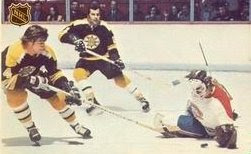
With a team loaded with former Habs, the Blues lost to the Canadiens in 1968 and 1969. The following year, St. Louis fell to the heavily favoured Bruins in four games. In fact, when Bobby Orr scored the Cup winner flying through the air, it was a former Hab - Noel Picard - who tripped him!

Early Blues history has the Canadiens written all over them. The Plager brothers, Barclay and Bill, who became legends in St. Louis, were once coached by Bowman in junior when they played for the Canadiens sponsored Peterborough (T.P.T.'s) Petes. Bowman lured some great names from the Canadiens past to play for the Blues during those years, including Jacques Plante, Doug Harvey, Ted Harris, Jean Guy Talbot, and Dickie Moore.

Small wonder the Blues contended so quickly!


Since 1967, sixty-six players, including many former Canadiens, have worn both the bluenote and the CH. Here's an alphabetical listing.

Don Awrey, Murray Baron, Normand Baron, Red Berenson, Bob Berry, Christian Bordeleau, Andre Boudrias, Valeri Bure, Jim Campbell, Guy Carbonneau, Shayne Corson, Bill Collins, Wayne Connelly, J.J. Daigneault, Gilbert Delorme, Rory Fitzpatrick, Ron Flockhart, Dave Gardner, Doug Gilmour, Gaston Gingras, Phil Goyette, Ted Harris, Doug Harvey, Sean Hill, Fran Huck, Pat Hughes, Mark Hunter, Mike Keane, Christian Laflamme, Mike Lalor, Guy Lapointe, Michel Larocque, Claude Larose, Gary Leeman, Chuck Lefley, Jocelyn Lemieux, Bill McCreary, Rick Meagher, Sergio Momesso, Dickie Moore, Phil Myre, Ric Natress, Greg Paslawski, Noel Picard, Jacques Plante, Michel Plasse, Stephane Quintal, Rob Ramage, Stephane Richer, Vincent Riendeau, Phil Roberto, Jimmy Roberts, Bill Root, Martin Rucinski, Glen Sather, Brian Savage, Bill Sutherland, Jean Guy Talbot, Larry Trader, Pierre Turgeon, Perry Turnbull, Ernie Wakely, Rick Wamsley, Eric Weinrich, Doug Wickenheiser, and Rick Wilson.

Additionally, several Habs prospects, such as goalie Ted Ouimet, and prospect Andre " Moose" Dupont, also got their NHL careers rolling in St. Louis, after toilling in the Habs system for years.

In 41 years of games between the Blues and Canadiens, the Habs have owned them big time. The teams have met 118 times, with the Canadiens holding a record of 70-25-22, with one overtime loss.

Here's hoping the dominations continues tonight. The Blues owe us!

Tuesday, September 09, 2008

How NHL Ironman Jarvis Became A Hab

The story behind how current Canadiens assistant coach Doug Jarvis became a Hab is a very interesting tale of Sam Pollock larceny.

Of the many thieveries made by Good Trader Sam, the Jarvis deal rarely gets the limelight perhaps because of the players quiet nature.

Over this past weekend, I picked up Brian McFarlane's "The Habs" reissue ( more on that in a bit ), and the author shed some light on what was long percieved to be just a bad trade on behalf of Pollock's dance partner, in this case, the Toronto Maple Leafs.

The roots of the mid 1970's trade actually begin with the drafting of Bob Gainey in 1974, and the unretiring of Ken Dryden one summer later, after a year of articling for a Toronto law firm.

Then Canadiens coach Scotty Bowman, an alumni of the once Habs sponsored Peterborough Petes, was friends with current Petes coach Roger Neilson. One day, they were talking shop, when Neilson mentioned to Bowman that he had a centreman on his team, who not only was the best triggerman on faceoffs in junior, but as good or better than any at the NHL level.

Neilson was speaking of Doug Jarvis, who was in the midst of a season in which he posted 45 goals and 88 assists in 69 games with Peterborough, as a 20 year old.

Bowman took Neilson's recommendation to Pollock, but the Habs GM demurred, stating that he knew of Jarvis from having scouted Gainey thouroughly, two seasons before when the two were team mates.

Pollock felt Jarvis was too small, but offered to send scouts to have a second look to appease Bowman's insistance. When Pollock stood firm a second time, Bowman did not give up, and he kept making his case to his manager.

The Canadiens kept their eyes on Jarvis, but their assessment remained the same. Pollock would not waste a high pick on such a small player.

As fate would have it, Jarvis was selected in the second round of the 1975 draft by the Maple Leafs, 24th overall. The Canadiens had three opportunities to nab the small faceoff specialist, with picks in the 9th, 15th, and 22nd spots, which they used to select Robin Sadler, Pierre Mondou and Brian Engblom, respectively.

Meanwhile, Ken Dryden was planning to return to the Canadiens, and Pollock had an extra goalie on his hands. In dryden's absense, the Canadiens had used all of Michel Plasse, Bunny Larocque and Thomas in goal, and clearly the club would not be carrying more than two with his law student back in the fold.

The happy problem's solution presented itself when the Maple Leafs came calling for the services of Thomas, as they desperately needed a starting goaltender to replace the waning Doug Favell.

Several trade scenarios presented themselves while Pollock stood firm in demanding a first round pick for Thomas, who had fared well as the Canadiens starter one season before.

Leafs GM Jim Gregory was willing to part with the high pick, but wanted a little something extra in return. Gregory set his sights on a Nova Scotia Voyageurs defenseman named Greg Hubick, who was fading from the Canadiens plans at age 25. Gregory wanted Hubick badly, but when Pollock then asked for an additional body to replace Hubick's usefullness with Nova Scotia, the deal hit a brick wall.

On June 17, the parties agreed to a Thomas for a first round pick swap - one for one (12th overall, Peter Lee) - with promises to return to discussing Hubick sometime soon.


Noting that the Leafs had selected Jarvis, Bowman hit upon Pollock to snare the centerman once more. The GM figured that using Hubick to snatch Jarvis was fairer game than wasting a second rounder, so he called the Leafs back to reopen discussions.

Upon calling, Pollock happened upon Harold Ballard, as Gregory was out of town. Ballard, as is well known, figured himself as good a judge of hockey talent as anyone, so he began listening to Pollock's advances.

The trouble for Ballard was, Pollock saw him coming all the way. The Leafs owner began stringing off names of players, such as aging defenseman Brian Glennie and Jim McKenna, but Pollock countered by saying he just wanted some young kid, it didn't matter who, as long as they could fit into the Voyageurs roster nicely.

After a bit of "Who do you want?", and "Who do you have?", Pollock had Ballard right where he wanted him.

Pollock knew of the many idiosyncrasies in Ballard's demeanor, and how he'd always been suspect of certain types of individuals. One of them - God help him - were Christians of the Born Again nature.

"What about that whatsisname, the religious kid?

"Jarvis, you want him, you can have him!", Ballard offered.

Deal done.

Greg Hubick went on to play 72 games for the Leafs that season, scoring 6 goals. Thomas caught fire in the season's first half, and represented Toronto at the All Star game, where he endured one hell of a shellacking over 30 minutes. He'd never return to form again.

A little over a season later, both had vanished from the Leafs scene for good.

Jarvis meanwhile, was set to embark on a string of four Stanley Cups and 964 consecutive games.

The diminutive Peterborough pivot caught several lucky breaks at his first Habs training camp. Continuously on the bubble for cuts, he managed to impress just at the right moment. Facing Chicago in an exhibition game that fall, Bowman played him against the Hawks Stan Mikita and surprisingly Jarvis took honours on almost every draw that night.

The Canadiens decided to keep him around just a little longer before making Nova Scotia his destiny, when Jacques Lemaire was injured and missed a dozen games.

Jarvis started the season, and did not miss a game for twelve full years. In fact, in one 80 game season, he actually played 82, when the Washington Capitals traded him to the Hartford Whalers in the mid 1980's.

It was there in Hartford that Jarvis broke Garry Unger's streak of 914 straight games played.

Finally, two games into the 1987-88 season, Jarvis discovered a press box for what was both the first and last time. After a short stint in the minors, Jarvis retired to focus on a coaching career.

So much for the small center Pollock felt was too small for the NHL.

To what, possibly, could Jarvis had owed his endurance to?

Who knows, maybe he prayed alot!

Robert L Note: As for the McFarlane book I mentioned briefly at the top, here is my review.

.

Tuesday, August 21, 2007

Remembering Sam


by ERIC DUHATSCHEK

From the Globe and Mail, Monday August 20, 2007

(Robert L Note: I've reprinted this Duhatschek article to archive it - it is so interesting! Simply linking to pieces from online newspapers is tricky. Often the link disappears after a month, and you can only gain access it through subscription. I didn't want this to happen here.)

The year was 1971. Sam Pollock, the legendary Montreal Canadiens general manager/horse trader, had already manoeuvred his way into the top pick in the National Hockey League's amateur draft, giving him the opportunity to select Guy Lafleur, a future Hall of Famer.

But he wanted more.

"The two best juniors by a mile that year were Lafleur and Marcel Dionne," recalled Scotty Bowman, one of the many Pollock protégés who went on to have fabulously successful NHL careers. "The night before the draft, we met for three hours and Sam grilled everybody in the room - Al MacNeil, Ronnie Caron, Claude Ruel and a couple of scouts - What should they do with Lafleur and Dionne?

"Then he excused himself and made a call to Ned Harkness, in Detroit, to propose a trade. The Canadiens had just won the Stanley Cup in '71 and Sam offered Detroit Phil Myre, plus either Terry Harper or J. C. Tremblay and something else, to get the second pick. And Detroit was going to do it, because they were going to get three players who could help them.

"I remember Sam came back in the room and said, 'If I make this deal, could it be another [Jean] Béliveau and [Bernie] Geoffrion for 10 years?' But nobody would stand up and say yes, so he didn't make the deal - because that's how Sam worked. If there were five people in the room, he would never do anything until he talked all five people into doing what he wanted to do.

"But that's how Sam operated. If there were two great players in the draft, he wouldn't be satisfied with saying, 'I'm getting Lafleur, to hell with Dionne.' He wanted them both."

Mr. Pollock left an unmatched legacy as an NHL wheeler-dealer. In 14 years as the Canadiens' general manager, he was at the helm for nine Stanley Cups. But, as Mr. Bowman pointed out, Mr. Pollock joined the Canadiens organization in 1947 and spent 17 years working behind the scenes in player development before getting promoted to GM - counted this way, he had his fingerprints on a total of 15 Stanley Cups in a 31-year span.

"The best way I can say it is, when all the rest of us were standing at the corner, waiting for the light to change, Sam was already three blocks down the street," said Frank Selke Jr., whose father gave Mr. Pollock his first job in the Canadiens organization.

Mr. Pollock, known as Sad Sam because of his dour visage, forged his reputation as a result of the many out-and-out thefts he completed. But the seeds of his success were sewn much earlier, when he joined the organization at 19 as an assistant coach with the 1945-46 Junior Canadiens.

He was hired largely because of his teenaged success managing a softball team made up mostly of Canadiens players, some of whom were 10 years older than him. Mr. Selke's father was impressed with the way Mr. Pollock handled people, even at that age.

Mr. Pollock would eventually succeed the senior Mr. Selke as Canadiens GM, and was later chairman of the Toronto Blue Jays between 1995 and 2000. His love for and knowledge of baseball was as great as his love of hockey, according to the younger Mr. Selke.

"On a scale of 1 to 10, if Sam was a 10½ in hockey, he was an 11 in baseball," he said. "... Sam would talk about baseball far more than he would talk about hockey. He'd say, 'I don't want to talk about hockey because then you'll know what I'm thinking and I don't want people to know what I'm thinking.' "

Mr. Pollock was intensely private. He would watch the Canadiens play from Section 66 in the old Forum - the highest part of the building.

He took over from Mr. Selke in 1964, three years before an ambitious expansion doubled the NHL from six teams to 12. Because Mr. Pollock sat in on board of governors meetings as an alternate, he understood the ins and outs of the process far better than his peers - a primary reason why the Canadiens flourished in the first decade after expansion.

Long-time NHL general manager Cliff Fletcher, who got his start in the Montreal organization under Mr. Pollock, called him "one of the architects of expansion" and said the Canadiens' success in the 1970s "was the result of Sam doing a better job than the other five general managers at the time when expansion came around, and parlaying fringe-line assets into futures."

His most memorable deal came on May 20, 1970, when he traded a pair of future NHL journeymen, Ernie Hicke and Chris Oddliefson, to the Oakland Seals for François Lacombe and the rights to Oakland's first pick in the 1971 draft, which he used to get Mr. Lafleur.

"It was the steal of steals," said former Canadiens player and coach Al MacNeil, who was the playing coach for Montreal's minor-league affiliate in Houston, where Mr. Hicke played. "Ernie was a tough, hard-working journeyman left-winger, but he wasn't going to be a star in the NHL."

It was also the year that Mr. Pollock traded a personal favourite, Ralph Backstrom, to the Los Angeles Kings, bolstering their chances of finishing ahead of Oakland and guaranteeing the top pick to Montreal. (Mr. Bowman, however, said Mr. Pollock always insisted that part of the story was fiction.)

Mr. Bowman first met Mr. Pollock in 1947, as a 14-year-old in his first year of midget hockey in Verdun. The Canadiens decided to put a second midget team in the small Quebec community and Mr. Pollock asked Mr. Bowman to switch sides.

"Sam said if I wanted to play for the midget Canadiens, I'd get a pair of pants, a pair of gloves and a pass to the Forum," Mr. Bowman said. "So it was a pretty easy decision to make."

He played in the organization until an eye injury prematurely ended his career. Mr. Pollock offered him his first full-time coaching job in 1956, when Mr. Bowman was working for a paint company and moonlighting as a Junior B coach on the side.

"Sam asked me, 'How much money do you make at the paint company?' I said, 'It's not bad, I'm making $3,800 a year.' He said, 'Well, this job pays $4,200.' He added about a 10-per-cent raise. I've always thought, 'I should have told him I made $4,800.' But I didn't care what they paid me. I just wanted to get my first job.

"He was a shrewd businessman. Even in the sixties and seventies, he believed the best player on the team had to make the most money and the second best should be paid the second most. It's really hard to do, and even in that era, it wasn't easy."

Mr. Pollock also relied on a vast network of trusted lieutenants sprinkled across professional leagues around North America, helping him make numerous trades that proved embarrassingly one-sided in Montreal's favour. Mr. MacNeil recalled a lesser-known example from 1969, when he was still working in Houston.

"We used to play Fort Worth all the time and they had Peter Mahovlich, who belonged to Detroit," said Mr. MacNeil. "He was one guy who really impressed both me and Ronnie Caron and we'd badger Sam and say, 'You've really got to keep an eye on this guy.' That year, Detroit called him up but didn't play him much, so the next spring, we ended up trading Doug Piper and Gary Monahan for Peter Mahovlich - who was a superstar for the next seven years with the Canadiens [and helped them win four Stanley Cups in that span]."


Mr. Bowman recalled an occasion when both he and Mr. Fletcher, who were handling the Canadiens' junior operations in 1963, had to confess to Mr. Pollock about an oversight they'd made relating to a then-unknown defenceman named Serge Savard.

That summer, the Canadiens had decided to drop the teenaged Mr. Savard from their protected list, but no one remembered to call him to deliver the bad news. September rolled around and Mr. Savard showed up at his boarding house in Montreal and called Mr. Fletcher at the Forum, looking for book money and room and board.

"Cliff came running to me and said, 'Remember that guy Savard? He's back in Montreal.' And we looked at each other and said, 'Well, Cliff, we got to go in and see Sam and tell him the truth.' So we both went in and said, 'Sam, we've got a real problem with Savard.' Right away, Sam jumped in and said, 'He's not here, is he?' We said, 'That's the problem, he is here.'

"And Sam said, 'Oh no, he wasn't on the list, you've got to send him home.' But we kind of liked Serge, so Cliff said, 'Sam, can we give him a chance until Christmas?' because Cliff knew some other guys in the league needed players and one was Doug Harvey's brother, Alf. Anyway, Sam said 'Okay, but only until Christmas, and if he's not cutting it by then, he's got to go home.'

"To make a long story short, by Christmas, Savard was playing great and had made the Junior Canadiens. But we were so afraid to tell Sam what happened. Of course, Savard's a Hall of Famer now. Sometimes, you've got to be lucky too."


Mr. Bowman left the Canadiens in 1966 to join the expansion St. Louis Blues, but returned after Montreal won the 1971 Stanley Cup, with Mr. MacNeil behind the bench. He stayed for eight seasons, winning five of his record nine Stanley Cups as a coach in that span.

"Sam had some very strange rules," Mr. Bowman said. "We weren't supposed to leave the Forum after practice until we stopped by his office. I would say 75 per cent of the time, his secretary would come out and say, 'Sam said go on, he doesn't need to see you today.' But he just wanted to know what was going on. He didn't watch many of the practices because he was so busy and he didn't go to a lot of the road games because he didn't like to travel, so we had to call him after every single game."

Mr. Pollock's keen interest in the business side of the operation led to what seemed like a premature departure from the game in 1978, at 53. The Canadiens were in the midst of another streak of four consecutive Stanley Cups, but he bowed out to join Carena Bancorp Holdings, part of the financial empire controlled by Canadiens owners Peter and Edward Bronfman, who were in the process of selling the team.

More than a dozen players from the Pollock era went on to become coaches and general managers in the NHL, including Mr. Bowman, Mr. Fletcher, Mr. MacNeil, Mr. Gainey, Jacques Lemaire, Doug Risebrough, Réjean Houle and others. Ken Dryden eventually became president of the Toronto Maple Leafs.

"The measure of Sam Pollock is he won nine Stanley Cups in 14 years," Mr. MacNeil said. "You can't even begin to fathom how difficult that is. What happens in any successful organization is that a cynicism creeps into the dressing room. Indifference can build up and you've got to guard against that if you want to be competitive year after year.

"For Montreal to keep winning on a continuous basis, that was the same as the New York Yankees in baseball. It was all because of Sam Pollock's driving force. There was a sombre quality to him at times, but he was a good person - his word was solid. He was an original - and you'll not see his like again."

Monday, May 14, 2007

On This Day, 30 Years Ago


In a season where they set NHL records for wins with 60 and points with 132, the Montreal Canadiens won the 20th Stanley Cup on May14, 1977. It was the 20th Cup in team history and their second of 4 consecutive championships.


Canadiens right winger Guy Lafleur was awarded the Conn Smythe Trophy as playoff MPV. In a seldom seen quadruple win, Lafleur also gained that season's Art Ross, Hart, and Lester Pearson trophies.

Many hockey experts deem the 1977 edition of the Canadiens as the best hockey team ever assembled. Its regular season record of 60 wins, 8 losses, and 12 ties explified the dominance of the team. They scored 387 goals while allowing only 171 for an astounding +216 plus/minus.

While the league did not publish individual +/- stats at the time, it is known that Larry Robinson led the NHL with a final count well above +100.

Lafleur and goalie Ken Dryden, defenseman Robinson, and left winger Steve Shutt were all first team All-Stars. Shutt and Lafleur led the league in goals wirh 60 and 56 respectively.

Other than the hardware accumulated by Lafleur, Robinson won the James Norris trophy, Dryden shared the Vezina Trophy with Michel Larocque, and coach Scotty Bowman won the Jack Adams trophy as coach of the year. Had the Presidents Cup, the Selke trophy, and the Rocket Richard trophy been instituted at the time, the dominant Canadiens would have likely swept them up as well.

Members of the 1977 Canadiens inducted in the Hockey Hall Of Fame include Lafleur, Shutt, Robinson, Dryden, Bowman, Serge Savard, Guy Lapointe, Bob Gainey and Yvan Cournoyer.

Sunday, January 28, 2007

Stanley Cup Name Trivia


It is often assumed, and rightly so, that to get one's name on the Stanley Cup, one must have to work at it.

In some instances, certain players have had to work at it harder than others.

As traditions and requirements for eligibility have changed over the years, there have been some odd additions and omissions. It is not only players who can earn the honour, anyone associated with the team now has an opportunity for Stanley immortality.


Ken Dryden was drafted 14th overall by the Boston Bruins in the 1964 NHL Amateur Draft. Dryden had no interest at the time in attending the Bruins camp, preferring to attend Cornell University and tend goal for the Big Red. Dryden was subsequently traded to the Canadiens for Guy Allen and Paul Reid, neither of whom would play a single NHL game. As a player with the rival Cornell, Dryden often played in the Boston Garden, and was quite used to its rowdy atmosphere by the time he helped the Canadiens to the surprise 1971 Cup. Dryden would be named the Conn Smythe Trophy in '71, and win "Rookie of the Year" the following season.


It is well known that Dryden is the only player to have ever won the Conn Smythe Trophy as playoff MVP before winning the Calder. In similar fashion, Canadiens prospect Christian Bordeleau won a Stanley Cup with the team in 1969 as a 19 year old before winning the Memorial Cup the next season with the Montreal Junior Canadiens.

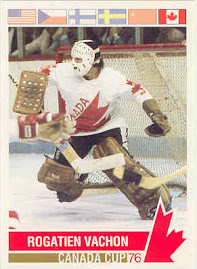
Chicago Blackhawks great, Tony Esposito started his career by getting his name on the Stanley Cup while serving as a third string goalie on a Montreal team that had Rogatien Vachon and Gump Worsley. Esposito played 13 games with 1969 Canadiens, including one very historic contest against his brother Phil's Boston Bruins that ended in a 0-0 draw. Much like Dryden, Esposito would also get his name on the Cup and go onto win the Calder Trophy in 1970, setting a modern day record with 15 shutouts in one season. In what became a Hall Of Fame career, Esposito reached the finals in 1971 and '73, but never did get to earn his name onto the Cup.


Former Norris Trophy winner Harry Howell enjoyed a lengthy 23 year professional career, mostly with the New York Rangers. When the defenseman retired in 1976, he left the game with the dubious honour as the player having played in the most games, 1141 in all, without having his name on the Cup. He was more fortunate as a scout, getting his name engraved amongst the 1989-90 Oilers championship team - in his first year on the job!

Steve Brule played one playoff game for the New Jersey Devils in 2000, getting his name on the Cup having played the least possible games. Three years later, Brule suited up for a pair of games with the Avalanche, who undoubtably signed him for his extensive Cup experience. Brule is still an active payer in the Austrian League with Graz EC.

Phil Housley, 12th in all time games played, is now the player having taken part in the most games, 1495, without getting a sniff of Stanley. Housley, played mainly with Buffalo and Winnipeg, before moving onto succession of 6 other teams. Mike Gartner, 1432 in 19 seasons, Norm Ullman, 1410 in 20 seasons, and Dale Hunter, with 1407 in 19 seasons, are next. Marcel Dionne, with 1771 points in 1348 games remains the games most prolific scorer not to have reached glory, however his younger brother Gilbert, who played a career total of 223 got lucky in 1993 with the Canadiens.

Ullman was particularly unfortunate, arriving just after the Detroit dynasty in 1955-56 and reaching the Leafs two years after their last win of thewir great 1960's run.

Incomprehensibly, goalie Ernie Wakely's name is in with the members of the 1964-65 champion Canadiens team. Wakely had played in just one game for the Habs - two years prior in 1962-63. He hadn't even set foot in the Forum in '65, playing with Omaha in the CPHL and Quebec and Cleveland of the AHL. Oddly, his name was added again in 1967-68, though he still hadn't played during that season. Wakely played one more game for the Canadiens in 1968-69, but this time there was no such luck with the mug. Wakely soon moved on to St.Louis where such screw ups were virtually impossible. He rounded out his career with a decade in the WHA.


On the 1983-84 engraving of the Edmonton Oilers, a name under owner Peter Pocklington appears this way, "XXXXX XXXXXXXXXXX". It is the X'd out name of Pocklington's father Basil, who had no direct correlation to the team. In the early 1990's, the Cup known as the Presentation Cup was sent to Montreal for repairs and returned missing the X'd name. An Islanders inscription had also been erroneously labelled "Ilanders" and the Cup was returned to be re-engraved with the Islanders name spelled correctly and the Pocklington X's added back on. The league directed this to preserve Stanley Cup lore. However, the Pocklington snafu is not found on what is known as the replica Cup, the one that sits at the HHOF and is used only when the Presentation Cup is on the road for various duties.

While the "Russian Rocket" Pavel Bure came close to winning the Stanley Cup in 1994 with the Canucks, the Bure name still found it's way onto the Stanley Cup. Inscribed among the names of the 2003 New jersey Devils, is one V. Bure. Vladimir Bure, father of Pavel and Valeri, was a fitness consultant with the team. The father was an Olympic swimming medalist in the 1968 and 1972 Olympics.

Scotty Bowman was born September 18, 1934. So why is his name in with the 1936-37 Detroit Red Wings champions when he was only three years old? The answer is simple, there are two "Scotty Bowman's". The first was a Winnipeg born defenseman who played with that years Wings team, named Ralph "Scotty" Bowman, and is inscribed on the Cup as simply "Scotty Bowman". The other, the legendary Canadiens and Red Wings coach, is named William Scott Bowman, but is best known as "Scotty". The coach who has won 9 Stanley Cups as a bench boss, named his son Stanley Glenn Bowman, after winning his first Cup in 1973. Stanley, of course was for the Cup, and Glenn was for Glenn Hall, the goaltender he admired most, and who who helped Bowman reach the Stanley Cup finals three years in a row with the St. Louis Blues.

Mike Ricci, who won with the Avalance in 1996, had friends over during the summer for a celebration day with the Cup.Among the guests were Ken and Cheryl Riley, who had been having trouble conceiving a child. During the party, Cheryl kissed the Cup and later in the day found out she was pregnant. When he was born, they named their son "Stanley C. Riley.