I spent a good part of my day Sunday on an egg hunt - online!
As I've mentioned here often before, one of my favorite hockey blogs for researching the history of the game, and specifically looking up Habs player bios, is Joe Pelletier's Greatest Hockey Legends. It's actually one of my daily stops because Joe's site has tons of Habs content, not surprisingly.
For anyone interested in the history of the Canadiens and their players, it is the best place to stop for well written biographies chock full of interesting and often forgotten detail. Joe's bio's are definitely not the bland variety that one finds at the Hockey Hall Of Fame site, as they often take on a more personal nature, delving into the lives of the players, before and after their careers have ended.
Speaking of bunnies, Mr. Pelletier's site ran an extremely cool contest over the Easter weekend with a handsome prize attached - a $100 gift certificate for Amazon.com. I have entered into the contest, spending a few hours to look for the 5 images of easter eggs - the one you see below - in order to qualify.
The rules are that simple. Peruse the over 700 players bio's at the site and find the 5 images shown above and e-mail the names of the players to Joe and you are entered into the draw.
I'd have found mine alot faster had I not stopped to read so much, but that was a big part of my fun, and the reason why I visit Greatest Hockey Legends as often as I do.
There is still time to get involved, as the contest closes midnight Pacific time ( Joe is on the West coast ) which would be 3 A.M. Tuesday morning E.S.T.
The contest is actually just an invitation to the site, one among many good reasons to get familiar with it if you are interested in hockey and it's history.
For starters, there are the Habs bio's that I mentioned, but beyond that, Greatest Hockey Legends also features content on the Stanley Cup, playoff miscelania, goaltending legends, hockey's tough guys, all time player rankings, everything you'd want to know about International Hockey Series such as the 1972 Summit Series and the Canada Cups....and the list goes on and on.
One of my prefered attractions to the site are Joe's book reviews. If there is a new book out that has to do with hockey, chances are that it will be reviewed at the site.
Anniversaries, in hockey history are also taken note of, such as this eventful evening. With backlinks to insightful content, all bases are covered.
What makes the whole site worthy, is Mr. Pelletier's style of writing - unearthing human detail and sticking unbiasedly to the facts at hand.
Joe is a member of the SIHR, the Society for International Hockey Research, an author of several hockey books, and he has been a referenced consultant for television programs on hockey. Every nuance of his site reflects his immersion in a love of the game.
I highly recommend anyone wanting to learn more about the Habs greatest legends to check out the site. On occasion, readers have even asked Mr. Pelletier to post bios on forgotten players, and he has complied.
Chances are, that if you make a regular stop at Hockey's Greatest Legends, you will learn something new real fast, or unearth a rare photo that will bring up an old memory, such as this one of Rangers GM and former Oilers coach Glen Sather, during his brief stint as a Canadien.
"If he (Kovalev) doesn't have any votes for MVP, I will be really upset," Canadiens coach Guy Carbonneau said. "We are at the top of the conference and he is a big part of it."
"His first goal, scored on a spin-o-rama in front of Chara, was quite something and was only to be outdone by his second tally of the night. In the third period he added an assist when he gave Kostitsyn a perfect no-look pass from behind the net." - Tobalev
"If the Habs don't have a goon, there's no one with whom the other goon can match up. And it would be a rare coach who would send an enforcer out after a guy like Tomas Plekanec.
"Après avoir marqué ses 32e et 33e buts au cours de la deuxième période, Kovalev a soulevé les partisans du Canadien en troisième période avec une superbe passe à son compagnon de trio Andrei Kostitsyn qui était fin seul à l’embouchure du filet. Un 22e but offert sur un plateau d'argent." - Eric Leblanc
"Le problème, c'est que les hommes masqués du Canadien sont probablement confus eux aussi. Surtout Carey Price, le numéro un qui doit rayonner à chaque soir, sans quoi c'est l'autre qui obtient le départ suivant. On a donné le cousin Huet aux Capitals de Washington pour faire toute la place à Price, et voilà qu'on lui impose un ménage à deux qu'il n'attendait probablement pas." - Richard Labbé
"Alex Kovalev n'a pas participé à la marque lors de la défaite contre les Blues et il faut souligner que le Canadien a conservé une fiche de 31-7-9 lorsque le numéro 27 a obtenu au moins un point dans un match cette saison." - Pierre Durocher
"Mine de rien, le Canadien est maintenant l'équipe qui possède le duo de gardiens le moins coûteux de toute la ligue. Sans compter ses bonis, Price empoche actuellement 850 000 $. Jaroslav Halak, dont le contrat se termine, reçoit 500 000 $. Posséder l'un des duos de l'avenir à un salaire global de 1 350 000 $ représente l'aubaine de cette fin de saison." - Bertrand Raymond
Not much, or at least never enough, is written about Guillaume Latendresse in the English media.
It's unfortunate because it would help remove what seems to have become a certain stigma regarding the big Quebec born winger.
I don't want this post to take on "a language issue" appearance, but it seems to me that if the english speaking only readers were more informed about how Latendresse is doing, they might be less inclined to criticize him unfairly.
And Latendresse is often criticized, only some of it fair.
Perhaps if readers were to learn what a frank young man Latendresse is, how he is constantly concerning himself with his play and progression, and how his coach appreciates not only his dedication but his willingness to learn, then they would find a sympathetic player who they would then better understand.
Latendresse has his weaknesses and has had his glaring moments of looking out of place, but he is an interesting package to develop and groom. His size and shot were NHL calibre at 18 and he has the potential to became a solid power forward when his complete game rounds out.
What I've always found most concerning was Latendresse's reading of the play between the blue lines because of his skating concerns. There are many laments about his skating stride, but it is his turns that need work most. His top speed going in a straight line is quite good and deceiving for a big player.
Nevertheless, his quickness in takeoff is that of a big player. When Latendresse becomes more adept at reading the play, his reaction time will improve with it. Once his skating turns gain more fluidity, combined with a better understanding for reading the plays that are breaking around him, his most glaring weakness will be less concerning.
As he works out these facets of the game, he continues to do many other things well that are not brought up often enough.
Recently, Latendresse has matched last season's goal total, but it would be unfair not to underline that he has done so with less top line and powerplay time than last season. He is fifth on the tean for goals scored. He has also made improvements defensively, going from a rookie like minus 20 to a more respectable minus 4 this season. He continues to throw hits at every opportunity, ranking third on the team in that category. Last season, he led all rookies in hits.
There is no statistic that tallies missed scoring opportunities, but it would be my guess that Latendresse is up there on the team as well. For the longest time he was stranded at 14 goals and seemed positively snakebitten around the net. It was good work that led him to being in position for the opportunities to come, and perhaps timing and confidence that led to them being missed. It is another area of Latendresse's game that will improve with dedication and hard work.
Often, it has been wondered aloud why Latendresse was never deemed worthy of a stint in the AHL in order to work on these and other facets of his game. With players such as Maxim Lapierre, Kyle Chipchura, Mikhail Grabovski and Carey Price all being Bulldogs at one point this season for different reasons, many assumed that Latendresse would also profit from such a stint.
His name is often brought up in regards to the unequal or preferential treatment of certain players because he never suffered the demotion many felt he had coming. It is then that the language nonsense comes into play, with suggestions that the team may fear some kind of backlash the moment Latendresse would be Hamilton bound.
I think that type of thinking is utter rubbish!
The Canadiens are in the business of grooming players, regardless of birthplace. That Latendresse happens to be french speaking is entirely inconsequential to his development as a hockey player.
Mentioned as well, negatively, is coach Carbonneau's view of the player. There is an obvious appreciation of Latendresse's skill set by the coach, and the work ethic of the player is constantly being monitored. He was given a press box seat on two occasions, and kept out of the starting lineup for an additional pair of games after being injured earlier in the year. It's far from a free pass for the player.
Perhaps the reason for Latendresse not being demoted lies in Bob Gainey and Carbonneau's assessement of where the player is at both physically and mentally. In this organization, players are sent back to Hamilton to work on certain aspects of their game, and not simply as punishment. It is important that players going to the Bulldogs are sent there in focus, and not with their tails between their legs.
It could be that Gainey and Carbonneau feel that Latendresse is best off continuing to work on his game at the NHL level. It is likely that their assessment tells them that this is where Latendresse's challenges lie and where his steps need to be measured.
When the decision was made for Latendresse to make the jump to the NHL from junior, these were surely scenarios that were discussed. They obviously didn't promote him to render him an AHL'er a season later.
The Canadiens brass have gotten good marks lately for their patience in dealing with young players brought into the team at fairly advanced stages. It has been eons since the Habs have had so many 20 and 21 years old on the team, learning as they go. The names of Sergei Kostitsyn, Carey Price and others are cited as examples of where the Habs have had the patience to let rookies make mistakes and learn from them. Yet, Latendresse is rarely mentioned in the same breathe as them.
The language issue does come into play in a realistic way for Latendresse as the focus on him from the get go was overblown to the max. It can't be easy for players from the Montreal area to deal with the pressure, and Latendresse has handled it all quite admirably for a 20 year old.
When I watch Latendresse play, I look at his progression and his intensity level to judge if he is the right track. So far, the strides he has made have not been huge ones, but there is consistant progression in his adaptation to the game around him. He has been given different roles and linemates in his two seasons with the Habs but has yet to find his true niche with regular line partners. Familiarity will go a long way towards helping cement Latendresse's role with the team and I see him as fitting in well on a crash and bang line with Maxim Lapierre and another player who brings grit and emotion.
Often with young players on the Canadiens, I look back into their history to find comparable situations with players who have the same tool set. Latendresse reminds me of none other than Yvon Lambert, another burly winger whose skating skills were suspect when he first turned pro.
Lambert was drafted by Detroit from the Quebec junior leagues and was slow to develop in the Red Wings system. After a trade brought him into the Habs fold, he was sent to the Nova Scotia Voyageurs for some grooming and he joined the Habs two seasons later.
Curiously, Latendresse and Lambert both played their junior days in Drummondville, and the similarities do not end there. Both players bring the same game, and Lambert learned to profit most from his size by throwing solid hits and being immovable in the crease. Despite a skating style that would best be described as abrasive at first, Lambert learned defensive positioning under Scotty Bowman and was never a detriment to the Habs on the ice. His slot readiness and shot made him a second unit power play regular, and his role became well defined once teamed with Mario Tremblay and Doug Risebrough.
Together the unit were used to specifically get under the skin of opponants, and Lambert went on to notch 6 seasons of more than 20 goals with the Canadiens. If such totals do not sound like much, consider that the trio were often the Habs thrid or fourth line on many night.
What differs greatly between the development of Lambert and Latendresse was that the former spent two years in the minors with the Voyageurs before being called up. In hindsight, the time spent there was beneficial to him.
As to whether the same treatment would have, or still would, befit Latendresse in the same manner in point moot now. Latendresse made the Canadiens at the start of the 2006 season after being one of their best players in two successive training camps. The Habs had an opening then, and he filled it. Lambert joined the Canadiens after the 1971 Stanley Cup, and worked hard for two seasons to crack a more established lineup.
This is new era for the Canadiens as they have begun to draft with the same steady hands that guided the team during it's 1970's heyday. Back then, they were often criticized for not giving the kids enough of a chance to develop but it was perhaps a reflection of how strong the Habs were drafting - they just couldn't keep everyone. Later on, in the 1980's and 1990's, when their drafts were less successful, the team was termed to be too hard on it's young players, and often gave up on them before seeing what they could bring at the NHL level.
It takes many different opinions to decide what to do with individual players and scenarios. One thing is for certain, no across the board policy for all players and situations is correct. Often it will be the player's showing that dictates how soon he is an NHL'er, as evidenced in the callup of Sergei Kostitsyn after only 20 or so games with Hamilton earlier this season.
Curiously, all of Kirk Muller, Doug Jarvis, and Bob Gainey made the jump almost straight from junior, with Gainey seeing a whole 6 games as a Voyageur in 1973. Carbonneau spent two full seasons before being called up, essentially taking Jarvis' place and number in 1982. This might represent why there seems to be different philosophies when it comes to handling the Canadiens youth.
In the case of Latendresse last season, the risk was minimal, as he could have always been sent back to junior. Such a scenario might have been deemed neccessary earlier on, but when Latendresse was given a more involved role he started putting up points and the decision was made to keep him in the NHL for the season.
This year, the watch has been on his work ethic and progression and the decision not to give him some Hamilton time likely lies in Gainey's view that there aren't the precise elements for linemates in Hamilton to help Latendresse along at the moment. It could also be a case of when sending down Latendresse, it puts back the progression of other players on the farm as well. Since the recall of Mikhail Grabovski, there are only so many offensive centerman on the Bulldogs to spread around.
There are many circumstances that can play into a decision that can have unforeseen consequences. When sending a player down the goal is not to set him back but set him up with the best possible surroundings.
In any event, the decision in Latendresse's case has been made. For the role he is being groomed to fullfill on the team, he has shown steady enough progress to remain with the club. It is always tougher to analyze what a player brings when 90% of his game relates to what is done before he gets to the puck, as opposed to when he is seen carrying it. Finesse is not Latendresse's game, nor should it be, but it is often something about him that is critiqued unfairly.
The final judgement on Guillaume Latendresse will be measured by his timing for being in the right place at the precise moment his skills are needed there. Whether it is delivering a crunching hit behind the net, crashing the slot for rebounds or passes, or simply being positioned smartly when the play heads the other way, this is where it will be determined how successful his adaptation is going.
Here are two translated articles, similar in nature from Le Journal and La Presse that speak of what goes on with Latendresse between games. They perhaps show a side of him that is not as commonly known by non readers of these papers. It sheds a light on the dedication of the young player becoming a pro.
Playing alongside of Saku Koivu and Michael Ryder on Saturday, Guillaume Latendresse played a solid game and netted his 16th goal of the year. In 15:31 of ice time, he had two shots on goal and was credited with two hits. "My role is different when playing with Koivu", says Latendresse. "I'm expected to produce and things went well on Saturday. Now it has to continue."
The 20 year old winger has matched his goal production from last season, his first in the NHL. There's a chance he could reach the 20 goal plateau.
"I'm happy to reach 16 because I have had less powerplay time this season", he noted. Latendresse mentions that he spends alot of time in the gym, as he has a tendency to put on weight easily.
"I'm putting in extra hours with Roland Melancon after the on ice workouts, and spending a lot of time with Francis Bouillon in the gym. We have our little routine that we do."
"Last season I spent less time doing those things. Scott Livingstone was giving me pushes to go", Latendresse admits.
Latendresse noted that he plans to emulate the practice taken on by team mate Tom Kostopoulos, who's been seen wearing weights attached to his skates in practice.
Coach Carbonneau has been impressed with Kostopoulos' speed in recent games.
"I think it's a good idea. When the weights are removed, things feel lighter. I'm going to try it out", he says.
Guillaume Latendresse is straight up. Yesterday, he spoke about how his training habits had taken on a more serious note than the year before.
"These weren't things I was doing regularly last season. It was Scott (Livingstone) who would say "you have to do it". This season I have a routine with Francis Bouillon and I see a big difference from last season."
"I'm also doing extra work with Roland Melancon. He's pointed out that if I were to work on improving my speed, it would also improve my longevity."
Latendresse has dropped a few pounds. Surely the work habits have something to do with it.
Here are five You Tube clips and compilations showing Latendresse's best moments in his two seasons so far.
I'm Robert L, and I hope that you enjoy the time you spend on my site. This blog has grown at a good clip over the past two plus years - I believe there are now close to 1000 postings here at this moment. If you are looking for older pieces, it helps to enter your query in the search bar at the top of the site or search the monthly archives. If there is something you are seeking, and can't find it, drop me a line, and I'll do my best to help you out. That also goes for any questions about the Montreal Canadiens, past, present, and future. Thank you for stopping by.
Gainey Foundation
For one last time with fire in your eyes you take the puck at centre ice driving hard with your legs you skate straight ahead as swiftly as you can but as you cross the enemy's blue line suddenly you no longer see the goalie the net disappears the boards open wide, a welcome gate to freedom and you escape the arena to the rivers of your youth and for hours, until the crowd is gone only night and silence remain the puck on your palette you skate forever without end on the endless ice of our memory until we all fade away and you breathe the pure air the absolute joy of skating alone eyes in the heavens without rumour, or goal free of all that hinders you.
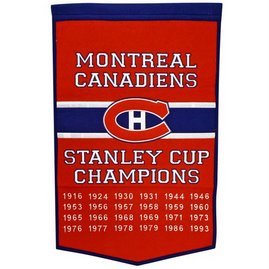
Roy's heroics, 10 straight OT wins, Eric Desjardins hat trick, and McSorley's illegal curve. A Cup win for the ages! It took an NHL record 10 overtime wins but the Montreal Canadiens prevailed winning their 24th Stanley Cup. This win gave the city of Montreal a Stanley Cup in every decade going back to the late 19th Century when the Cup was first awarded. Goaltender Patrick Roy became the fifth player in NHL history to capture the Conn Smythe Trophy twice, also having won it in 1986. He played very well, losing but four games over four series. After defeating Quebec, Buffalo, and the New York Islanders, Montreal came up against Wayne Gretzky and the Los Angeles Kings. Hockey was hitting a feverish pitch in the west and Gretzky, as in the past, was the playoff scoring leader. Los Angeles opened the series with a 4-1 win at the Montreal Forum. But the Canadiens bounced back winning three straight overtime games and then taking home the Stanley Cup with a 4-1 win of their own at home. This would be the last Stanley Cup appearance for Wayne Gretzky.
1986 Stanley Cup Champions
In the first all-Canadian final since 1967, the Montreal Canadiens won their 23rd Stanley Cup, an NHL record. Rookie goaltender Patrick Roy was sensational posting a 1.92 goals-against average in 20 games. He became the youngest winner of the Conn Smythe Trophy at the tender age of 20. Roy's playoff run made a name for himself and reminded fans of former Montreal goaltender Ken Dryden who also won the Cup as a rookie, back in 1971. The Habs' offensive sparkplug was Swedish-winger Mats Naslund, who recorded seven points in the final. Calgary would revenge this Cup defeat four years later, defeating the Habs in the rematch.
1979 Stanley Cup Champions
Yet another Montreal Canadiens dynasty was capped off with this, their fourth straight Stanley Cup victory. What was more remarkable, perhaps, was that this was the second time Montreal had won four straight dating back to 1960 when they won five straight. This was the Canadiens' sixth cup of the decade. Bob Gainey won the Conn Smythe Trophy, scoring 16 points in 6 games. Ken Dryden, Yvan Cournoyer, and Jaques Lemaire retired after the season, having combined for an amazing 24 Cup rings. This would also be coach Scotty Bowman's last year behind the Canadiens bench having coached his fifth Stanley Cup title.
1978 Stanley Cup Champions
Finishing only one win shy of another 60-win regular season, Montreal only needed nine games to reach the Stanley Cup Finals. Montreal's hard-line defenseman and Conn Smythe-winner Larry Robinson tied Guy Lafleur for the overall points lead in the playoffs. Vezina-winner Ken Dryden was stellar in the finals, surrendering a league-low 1.89 goals-against average. Montreal defeated Boston four games to two and won their third straight Stanley Cup. The silverware spree continued at season's end. Lafleur claimed the Hart, Art Ross and Pearson awards, captain Bob Gainey won the first-ever Selke, and Dryden, as mentioned, won the Vezina, sharing the honour with Michel Larocque.
1977 Stanley Cup Champions
Montreal proved to be unstoppable in their quest for a second straight Stanley Cup. They won a record 60 games in the regular season, including an incredible 33-1 home record! The playoffs were no different. Montreal rolled over the Bruins in the finals, taking the Cup in a four-game sweep. Guy Lafleur led the playoff-scoring race tallying 26 points in 14 games. Come season end he was awarded the Conn Smythe, Hart, Art Ross and Pearson trophies. Defenseman Larry Robinson won the Norris Trophy, Ken Dryden and Michel Larocque shared the Vezina and coach Scotty Bowman won his first Jack Adams Award.
1976 Stanley Cup Champions
For the third year in a row, the Philadelphia Flyers made it to the Stanley Cup Finals. Unlike the previous two years, however, Philadelphia came up against a much stronger team. The Montreal Canadiens had won a regular season record 58 games and cruised past Chicago and the New York Islanders, losing only one game in the process. The Flyers could not defeat the powerhouse Canadiens and were swept in four games. Montreal's Guy Lafleur led all skaters with seven points in the final series. One bright spot for Philadelphia was Reggie Leach who scored a record 19 post-season goals and took home the Conn Smythe Trophy. "This is not only a victory for the Canadiens; it is a victory for hockey. I hope that this era of intimidation and violence that is hurting our national sport is coming to an end. Young people have seen that a team can play electrifying, fascinating hockey while still behaving like gentlemen." - Serge Savard
1973 Stanley Cup Champions
In what was a rematch of the 1971 Stanley Cup Finals, the Montreal Canadiens met the Chicago Black Hawks. The series pitted the league's top two netminders, Ken Dryden of Montreal and Tony Esposito of Chicago. However this series was far from a defensive battle. In fact, in four of the six games, the teams combined for ten or more goals. Montreal prevailed winning the Cup in Chicago. This would be Henri Richard's 11th Cup win, a record, and coach Scotty Bowman's first. Yvan Cournoyer scored 15 goals to capture the Conn Smythe Trophy.
1971 Stanley Cup Champions
After missing the playoffs for the first time since 1948, the Montreal Canadiens entered the 1970-71 season on a mission. They did not disappoint. The Habs were able to defeat the Chicago Black Hawks in a thrilling seven-game final. Henri Richard was the hero of game seven, scoring two goals in Montreal's come-from-behind 3-2 win. Rookie netminder Ken Dryden stole the playoff limelight by posting a 3.00 goals-against average in 20 playoff games. Dryden was awarded the Conn Smythe Trophy in the process. Montreal collected their 16th Stanley Cup win, and said goodbye to captain Jean Beliveau, who retired at the conclusion of the season.
1969 Stanley Cup Champions
Montreal coach Claude Ruel became the 11th coach in NHL history to win a Cup in his rookie season. The Canadiens lost only two playoff games en route to defeating the St. Louis Blues in the finals for the second straight season. Montreal goaltender Rogie Vachon held St. Louis at bay, allowing only three goals in the four games. The Habs Serge Savard became the first defenseman to win the Conn Smythe Trophy as playoff MVP with a strong two-way performance.
1968 Stanley Cup Champions
This was the first season for the NHL's six new teams. Expansion introduced a longer regular season and playoff schedule. The Montreal Canadiens, after losing in 1967 to Toronto, were able to sweep the first expansion team to reach the finals, the St. Louis Blues. The Canadiens lost only one game in the playoffs, and handed the Blues a ticket back to St. Louis with a 3-2 win in Montreal in game four. This would be the eighth and last Stanley Cup for legendary coach Hector "Toe" Blake. The Conn Smythe Trophy was awarded to a player on the losing team for the second time in history. St. Louis goaltender Glenn Hall captured the prize, playing in 18 games and posting a 2.43 goals-against average.
1966 Stanley Cup Champions
The Montreal Canadiens, fresh off a Stanley Cup celebration, went into the 1965-66 season with a strong team and desire to repeat, and finished the season in first place. They met the Toronto Maple Leafs in the semi-finals, and made short work of the Leafs, eliminating them in four straight games. Meanwhile, Detroit and Chicago met to decide who would challenge Montreal for the Stanley Cup. The Red Wings won the series four games to two, to enter the fray for the Stanley Cup. Detroit won the first two games of the final, with Roger Crozier at his acrobatic best in goal. But Montreal persevered to win the next four straight, and took the series four games to two to win their second straight Stanley Cup. Henri Richard scored the overtime Cup-winning goal in game six. Although his team lost the final, Detroit goaltender Roger Crozier posted a 2.17 goals-against average in 12 games and was awarded the Conn Smythe Trophy.
1965 Stanley Cup Champions
First place Detroit was challenged by the Chicago Black Hawks in one semi-final series, while the two Canadian teams, Montreal and Toronto, battled in the other. It took seven games, but the Black Hawks eliminated the Red Wings, and the Habs pushed the Leafs aside four games to two, ending Toronto's three-year Cup run. Montreal's Gump Worsley played in his first Stanley Cup final after 12 seasons in the NHL. The Canadiens won the series against Chicago four games to three, but three of those four victories came by shutout. Charlie Hodge recorded one shutout, while the veteran Worsley played four games, recording two shutouts, most notably shutting out Chicago in game seven to lift Montreal to the Stanley Cup title. Captain Jean Beliveau won the first-ever Conn Smythe Trophy for Most Valuable Player in the playoffs, scoring 16 points in 13 games.
1960 Stanley Cup Champions
On April 14, 1960, the Montreal Canadiens set a record that still stands. They won their fifth straight Stanley Cup championship. Montreal did not lose a single game in the playoffs. This season featured Jacques Plante donning a mask for the first time in the playoffs. He was able to hold Toronto to just five goals in four games, including a 4-0 shutout in game four, the Stanley Cup winner. Maurice "Rocket" Richard played in the final four games of his marvellous career, scoring the 34th goal of his playoff career during these finals.
1959 Stanley Cup Champions
Breaking the previous record of three consecutive Stanley Cup wins, the Montreal Canadiens won their fourth Cup with a four to one series win over the Toronto Maple Leafs. Toronto, undefeated in playoff overtime games that season, was unable to beat the star-laden Canadiens. For the first time in his brilliant career, Maurice Richard was held pointless in the post-season. Unfortunately, the Rocket's injuries limited him to only four out of the 11 games Montreal played. The Habs' Bernie Geoffrion and Ralph Backstrom paced all scorers with seven points apiece in the Final series.
1958 Stanley Cup Champions
For a second consecutive year, the Montreal Canadiens met the Boston Bruins in the Stanley Cup final. Boston was coming off a high scoring series in which they defeated the New York Rangers, outscoring them 28 to 16. Maurice Richard led the playoffs in scoring with 11 goals. It took Montreal six games to defeat the Bruins, completing the series win with a 5-3 victory at the Boston Garden. This third straight Stanley Cup win equalled the previous record set by Toronto, who won Stanley Cups in 1947, 1948 and 1949.
1957 Stanley Cup Champions
Many did not expect Boston to defeat Detroit in the semi-finals. They did, however, and were matched up against the Montreal Canadiens in a battle for the Stanley Cup. Montreal, coming off a 4-1 series win against New York, defeated the Bruins by the same series score. Maurice Richard scored four goals in game four, tying Ted Lindsay's record for most goals in a Stanley Cup game. The Canadiens won their second straight Stanley Cup as netminder Jacques Plante allowed but five goals in five games in the finals.
1956 Stanley Cup Champions
With a 4-1 series win over Detroit in 1956, Montreal started a consecutive championship streak that would reach five?a record to this day. Rookie coach Toe Blake replaced Dick Irvin, and Henri Richard, brother of Maurice, started his playing career. Henri would go on to win an unprecedented 11 Stanley Cup rings. Jean Beliveau scored seven goals to set the all time record for goals in the finals, including one in each game. Montreal won the Stanley Cup at home with a 3-1 triumph in game five.
1953 Stanley Cup Champions
Montreal netminder Gerry McNeil replaced Jacques Plante after the first two games of the final between the Canadiens and Boston. Plante had won the first game of the series, but lost the second. McNeil won three straight to help Montreal win the Stanley Cup. And he did it in all-star fashion as well, earning two shutouts and a 7-3 win in game four. Maurice Richard led the Habs offensively with four goals in the final. This was Montreal's first Stanley Cup win in seven years. This Cup win was incidentally the first for Plante and Doug Harvey, as well as the last for veteran Elmer Lach.
1946 Stanley Cup Champions
World War II had come to a conclusion, and the influx of 40 NHL players returning from military service changed the complexion of the National Hockey League considerably. The Montreal Canadiens finished first for a third straight season, and were going to face the third place Black Hawks in the first round of the playoffs. The other round found Boston being challenged by the fourth place Red Wings. Montreal blanked the Black Hawks in four games to progress to the final, while Boston eliminated Detroit four games to one to earn entrance to the championship series. Montreal and the Bruins battled hard, with three of the games needing overtime to decide a winner. But when all was said and done, the Canadiens were presented with the Stanley Cup for a sixth time. Elmer Lach and Maurice Richard, the former accounting for a series-high seven points, led Montreal in the finals.
1944 Stanley Cup Champions
First place Montreal was facing the third place Leafs in round one, while second place Detroit was challenged by Boston, the fourth place finishers during the regular season. The Leafs were using Paul Bibeault in goal. Bibeault had been borrowed from the Canadiens partway through the season to replace Turk Broda. Maurice Richard scored five goals in the second game of the series. In game five, the Canadiens trounced Toronto 11-0 to win the series four games to one. In the other series, the Black Hawks knocked Detroit out of playoff competition, four games to one as well. That set the showdown for a Canadiens-Chicago final. But Montreal wasn't to be denied. They won the Stanley Cup in four straight games to win their first championship since 1930-31. The Canadiens' potent Punch Line of Toe Blake, Maurice Richard and Elmer Lach led the charge, accounting for 10 of Montreal's 15 goals in the final series.
1931 Stanley Cup Champions
After winning their respective divisions, the Montreal Canadiens and Boston Bruins met in a best of five series to decide who would advance to the Stanley Cup final. It took all five games, but the Canadiens won the series, winning each of their three games in overtime. Elsewhere, the New York Rangers beat the Maroons of Montreal in a two game total goal series, while Chicago earned a victory over the Maple Leafs with an overtime goal in the second of their two games. Facing the Rangers in the semi-final, Chicago shut out New York in both games of their two game total goal series to win entrance to the Stanley Cup final. Game one between the Canadiens and Black Hawks was won by Montreal in overtime. The second game of the best of five series went to Chicago?again, in overtime. Game three also went into overtime, with Chicago emerging with the victory. Montreal fought back and won the next two contests (in regulation time) to earn the Stanley Cup. It was the second straight Cup celebration for the Canadiens.
1930 Stanley Cup Champions
The Montreal Maroons were the class of the Canadian Division, finishing first. In the American Division, Boston catapulted by the competition finishing with 77 points?30 more than the second place Chicago Black Hawks. The two division winners met in the semi-final to decide which team would win a berth in the Stanley Cup final. Boston prevailed with a three game to one victory in the best of five series. In the quarterfinals, the Montreal Canadiens outscored Chicago, while the Rangers outscored Ottawa. The semi-final, therefore, saw New York pitted against the Canadiens. In a best of three series, Montreal won two games to advance to the Cup final against Boston. The Bruins, defending the Stanley Cup, were confident that they could defeat the Canadiens in the best of three series, but were astonished when Montreal blanked them 3-0 in game one with George Hainsworth posting the shutout. The Habs again surprised the Bruins, defeating them by a 4-3 score to win the Stanley Cup. It was the only time all season that the Boston Bruins would lose two games in a row.
1924 Stanley Cup Champions
In order to claim the Stanley Cup, the Montreal Canadiens needed to defeat both the WCHL Champion Vancouver Maroons and the PCHA Champion Calgary Tigers. Billy Boucher scored three of the Canadiens' five goals, including both game winners, to eliminate Vancouver. And versus Calgary, Montreal's 21-year-old rookie Howie Morenz registered a hat-trick in games one and two as the Habs completed the sweep. Game two of the final series was played in Ottawa to take advantage of the artificial ice surface.
1916 Stanley Cup Champions
In 1916, the Montreal Canadiens of the National Hockey Association won their first of 24 Stanley Cups. The Canadiens, winners of the NHA, faced the Rosebuds from Portland in a best of five competition. For the first time, a best of five Stanley Cup championship went the distance. After the Rosebuds won game one, 2-0, Montreal captured games two and three to gain the advantage. Portland came back to even the series in game four to set up the deciding fifth game. In the final match, the Canadiens bounced back from an early 1-0 deficit to score two unanswered goals, with seldom-used Goldie Prodgers netting the Cup winner.
Won the Hart Trophy (1964), the Vezina six times (1956 through 1960 & 1962) and was elected to six NHL All-Star teams. Popularized the goalie mask. Member of the Hall of Fame.
Won the Norris Throphy for four consecutive years and was elected to ten NHl All-Star teams. A 6 time Stanley Cup winner. Member of the Hall of Fame.
Won the Norris Throphy for four consecutive years and was elected to ten NHl All-Star teams. A 6 time Stanley Cup winner. Member of the Hall of Fame.
Won the Calder Trophy (1952), the Art Ross (1955, 1961), the Hart Memorial (1961). Passed away the day his sweater was retired. Member of Hall of Fame.
Hockey's first superstar. Won the Hart Trophy three times (1928, 1931, and 1932), was the scoring leader twice (1928 & 1931) and was elected to three NHL All-Star teams. Died following an injury sustained during a game. Member of Hall of Fame.
Won the Hart Trophy (1947) and was elected to 14 NHl All-Star teams. First player to score 50 goals. Best Goal scorer in Canadiens history (544). Known to cause riots. Member of Hall of Fame.
Won Hart Trophy (1977 and 1978) the Art Ross (1976, 1977, 1978), the Conn Smythe (1977) and was elected to five NHL All-Star teams. Scored 50 or more goals during six consecutive seasons. Member of the Hall of Fame.
Won Art Ross Trophy (1958, 1959) and was elected to three NHL All-Star teams. Won Stanley Cup 6 times. Member of the Hall of Fame
Won Conn Smythe (1973). Won Stanley Cup 10 times. Member of the Hall of Fame.
Elected four NHL All-Star teams, Winner of the Bill Masterton Trophy (1974). Won Stanley Cup 11 times, NHL record. Member of Hall of Fame
Winner of the Conn Smythe Trophy (1969), and Bill Masterton Trophy (1979). Won Stanley Cup 8 times, NHL record. Member of Hall of Fame.
Winner of Conn Smythe Trophy (1978) . First All-Star Team Defense (1977, 1979, 1980). Winner of James Norris Memorial Trophy (1977, 1980) . Second All-Star Team Defense (1978, 1981, 1986) . Winner of 6 Stanley Cups. Member of Hall of Fame.
Winner of Conn Smythe Trophy (1979). Winner of Frank J. Selke Trophy (1978, 1979, 1980, 1981). Winner of 5 Stanley Cups. Member of hall of Fame.
Elected five NHL All-Star teams. Winner of the Calder Memorial and Conn Smythe Trophy (1971). Winner of 5 Vezina trophies. Won Stanley Cup 6 times, NHL record. Member of Hall of Fame.


 I highly recommend anyone wanting to learn more about the Habs greatest legends to check out the site. On occasion, readers have even asked Mr. Pelletier to post bios on forgotten players, and he has complied.


 Kovy Is Magic